So tireseome. So tedious. Yet I reply anyway, you'd think I'd know better.
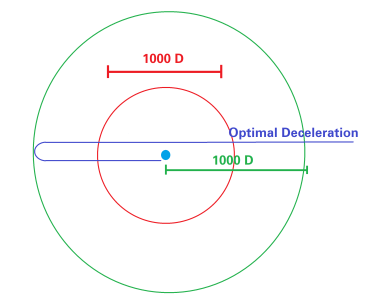
Earth: diameter ~12000km. 1000 x 12000 =12,000,000km * 1000 =1.2×10¹⁰m.
Time to travel 1000d at 1G (10/m/s/s) = 48989s. V = 10 * 48989 = 489890 m/s, or 490 kps.
Earth -> Jupiter 588Mkm. 1/2 588Mkm = 294Mkm
294Mkm / 490kps = 600015s, / 3600 = 166 hours * 2 for the turn around and decel (they can start decelerating earlier in Jupiters 1000D, but no real point, velocity is the same, and ignoring Jupiters monstrous gravity). So, 166 * 2 =332/ 24 =13.833
Or "About 2 weeks".
This math is more accurate-ish.
Code:
(defun trip (a d)
  (let* ((d1000 (* d 1000 1000))
         (time-to-d (time-with-accel-distance a d1000))
         (v (* time-to-d a))
         (accel-distance (* 2 d1000))
         (jupiter-distance (* 588 1000000 1000))
         (cruise-distance (- jupiter-distance accel-distance))
         (total-time (+ (* 2.0 time-to-d) (/ cruise-distance v))))
    (list total-time (/ total-time 3600) (/ total-time 86400))))
Code:
CL-USER> (trip 10 12000)
(1249239.9 347.01108 14.458795)
Unfortunately, the trip back from Jupiter is no better. While there's more room to accelerate, there isn't on the receiving end, so you're stuck with Earths diameter.