• Welcome to the new COTI server. We've moved the Citizens to a new server. Please let us know in the COTI Website issue forum if you find any problems.
  • We, the systems administration staff, apologize for this unexpected outage of the boards. We have resolved the root cause of the problem and there should be no further disruptions.

dton frame of reference

This is really handy.
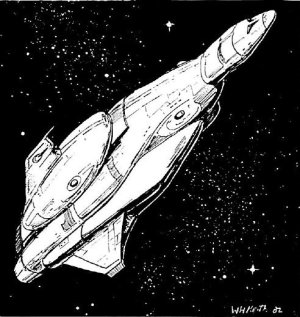
It's weird how fighters are typically depicted as little things in Traveller artwork when 10 dt is about the size of a school bus. An X wing must be no bigger than maybe 2 dt? I suppose small movie props cost less.
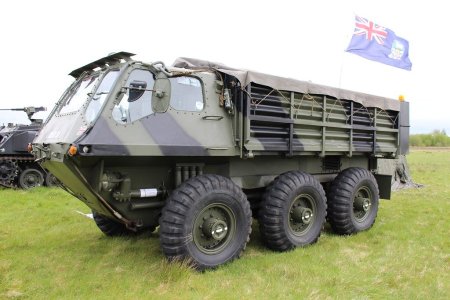
It used to surprise me as well, especially when doing ship floorplans and making bays of the stated size. for example, a standard 4 dton Air/Raft, often depicted in art as being as small as a jeep or family car, should actually be about the size of one of these. Because of this, I tend to let players to buy different sized versions, smaller ones for flitting about a city, with the 4 dtonner mostly used for cargo loading/unloading.
 

Attachments

  • alvis stalwart.jpg
    alvis stalwart.jpg
    153.8 KB · Views: 4
I normally use x2 for battleships, x2.5 for WWII cruisers, and x3 for other warships.

Modern carriers Do carry a lot of very massy stuff, though - engines, fuel, reactors if USN. I'm not sure where that leaves them, though. I just x3 for simplicity.

As for the Liberty ships - I've seen a full load displacement of ~14,000 long tons given, and it's fairly well documented that they'd sometimes carry rather more cargo than they were rated for. 14,000 tons displacement and a x3 ratio for overall volume gives about 3,000 DTons. Using CT hulls, I'd use a 3,000 DTon hull and at about 2,400 DTons of cargo (assuming M1, J1, which is probably low for a Liberty Ship type - they had a lot of range, but as well all know adding more jump range rapidly eats into cargo capacity).

This is why I say that Book 2 ships are actually quite small.

The CT Spinward Marches campaign book, FASA publications, as well as later Megatraveller did introduce a load of 1-5000 dton merchant starships for use in games. Fighting Ships LBB also had a 5000t Jump tug that could tow another 5000t in various modules, while Library Data had a 300,000 ton World class Battle Tender mentioned, that could easily carry (if owned by a megacorporation) massive cargo pods instead of Battleriders in peacetime. Because of these, I saw the usual 'adventure' class ships as similar to the little delivery vans, trucks and coaches we have on our roads today, with the bigger stuff being equivelent to our bulk rail and sea shipping.

One of the objectives of playing a merchant in some CT games was to try to make it rich and move up from the rusty little Tramp Freighter to becoming Merchant Princes in charge of a huge Liner, a Bulk Freighter or even an entire shipping line. Being the crew of a little Free Trader can often be just the start point to much greater things and not the be all and end all of a campaign.
 

Attachments

  • 5000t hercules bulk transport.jpg
    5000t hercules bulk transport.jpg
    66.9 KB · Views: 3
It used to surprise me as well, especially when doing ship floorplans and making bays of the stated size. for example, a standard 4 dton Air/Raft, often depicted in art as being as small as a jeep or family car, should actually be about the size of one of these. Because of this, I tend to let players to buy different sized versions, smaller ones for flitting about a city, with the 4 dtonner mostly used for cargo loading/unloading.
I tend to look at the tonnages of vehicles in CT as being the vehicle plus access space around it, as they are the displacement tons required for that vehicle to be carried in a readily usable state in a spaceship's hanger. Thus the 4 DTons 'displacement' for an air/raft is enough space to park the vehicle, embark/disembark, open it up for basic maintenance, stand up while in it, and so on. An open-topped air/raft isn't going to actually fill up half that volume, and an enclosed maybe half.
 
I tend to look at the tonnages of vehicles in CT as being the vehicle plus access space around it, as they are the displacement tons required for that vehicle to be carried in a readily usable state in a spaceship's hanger. Thus the 4 DTons 'displacement' for an air/raft is enough space to park the vehicle, embark/disembark, open it up for basic maintenance, stand up while in it, and so on. An open-topped air/raft isn't going to actually fill up half that volume, and an enclosed maybe half.
I used to go by that as well, until a player suggested that if an Air/Raft is only really smaller (like the art suggests), they should be able to stack two or more in each 4 dton bay. In the end we decided to go with the vehicle is as big as it says it is (it fits into the bay all snug like a cutter or ship boat does to prevent rattling if the g compensators fail) with the vehicle either having to be serviced in a larger cargo bay or outside the ship. You could even add extra volume for an adjacent servicing bay if you need to, Highguard has small craft requiring more volume than just the craft itself and some of them are the same volume or smaller than many of the standard vehicles (6 ton fighter vs a Speeder, G-Carrier or ATV?), but that might be something for larger ships, not standard for the typical tiny Trader?
 
What you can do are actual dimensions, plus margin, if you want to go into finer detail.

Or, form follows function, and you could have an exact tube fit into an exact docking well, which allows launching, but likely redocking has to done through the other end, via a larger hangar, and careful placement back into that exact docking well.
 
Back
Top