• Welcome to the new COTI server. We've moved the Citizens to a new server. Please let us know in the COTI Website issue forum if you find any problems.
  • We, the systems administration staff, apologize for this unexpected outage of the boards. We have resolved the root cause of the problem and there should be no further disruptions.

General What is your most common food or drink in The Third Imperium?

Beer is ubiquitous, of course, and everyone but the Solomani acknowledge that Vilani shugili are the best brewers in Charted Space.

What a good catch! The clever clogs who wrote the Vilani Glossary and Grammar proposed eight Vilani-style beers: gunika mase (a hot beer, served as an aperitif), kam rige (slow beer), kas (beer), marshu (desert beer), nasharas (fizzy beer), nekrishari (lambic or sour beer), rasri (soft beer), and shekisasaa (hopped beer).

That's a lot of beer.

I love your link; that's a thoughtful take on fermentation in the far future.
 
The clever clogs who wrote the Vilani Glossary and Grammar proposed eight Vilani-style beers: gunika mase (a hot beer, served as an aperitif), kam rige (slow beer), kas (beer), marshu (desert beer), nasharas (fizzy beer), nekrishari (lambic or sour beer), rasri (soft beer), and shekisasaa (hopped beer).
You forgot kasgig, "black beer - strong, dark, usually sweet," which is the favorite of a couple of my characters with Vilani roots.

One of my current characters, Ree Azzer - his surname is suggested to have been Azuur in generations past - has Homebrewing-4 as one of his background skills. Between Ree's homebrewing talent and his wife Lishda's Horticulture-4, they have a really good time together.

I love your link; that's a thoughtful take on fermentation in the far future.
If anyone was ever the right audience for that post, it's The Vilani Chef!
 
R.27a7bef44b8352e8091eb77117f7e0c8


Now you know what Vilani pickling is like! 🤮
 
Casu martzu[1] (Sardinian: [ˈkazu ˈmaɾtsu]; lit. 'rotten/putrid cheese'), sometimes spelled casu marzu, and also called casu modde, casu cundídu and casu fràzigu in Sardinian, is a traditional Sardinian sheep milk cheese that contains live insect larvae (maggots).

Derived from pecorino, casu martzu goes beyond typical fermentation to a stage of decomposition, brought about by the digestive action of the larvae of the cheese fly of the Piophilidae family. These larvae are deliberately introduced to the cheese, promoting an advanced level of fermentation and breaking down of the cheese's fats. The texture of the cheese becomes very soft, with some liquid (called làgrima, Sardinian for "teardrop") seeping out. The larvae themselves appear as translucent white worms, roughly 8 mm (5⁄16 in) long.[2]

When consumed, the larvae can possibly survive in the intestine, causing enteric pseudomyiasis;[3][4] however, no cases have been linked to the cheese.[5] Additionally, these larvae can carry harmful microorganisms that may lead to infections. Due to these risks, Italian authorities have banned the sale of this cheese, deeming it dangerous. Consequently, it is also prohibited across the European Union, as EU food safety regulations mandate that only food safe for consumption can be sold.[4]

Variations of this cheese also exist in Corsica, France, where it is called casgiu merzu;[6] it is especially produced in some Southern Corsican villages like Sartène.[7]
 
Introducing our infamous Schweet Beybey Rays BBQ Short Bwap Ribs! Slow cooked in our OMG, it's K'kree sauce. Served with a side of Dandelion n' greens and some zesty Vargr Knucklebiscuts. With a bottle of Dr. Hivers Digestive Drink.

All this Galactic Gasto Delight for only 10 credits! That's right, 10 credits..

Only available at Star Trigger BBQ!
 
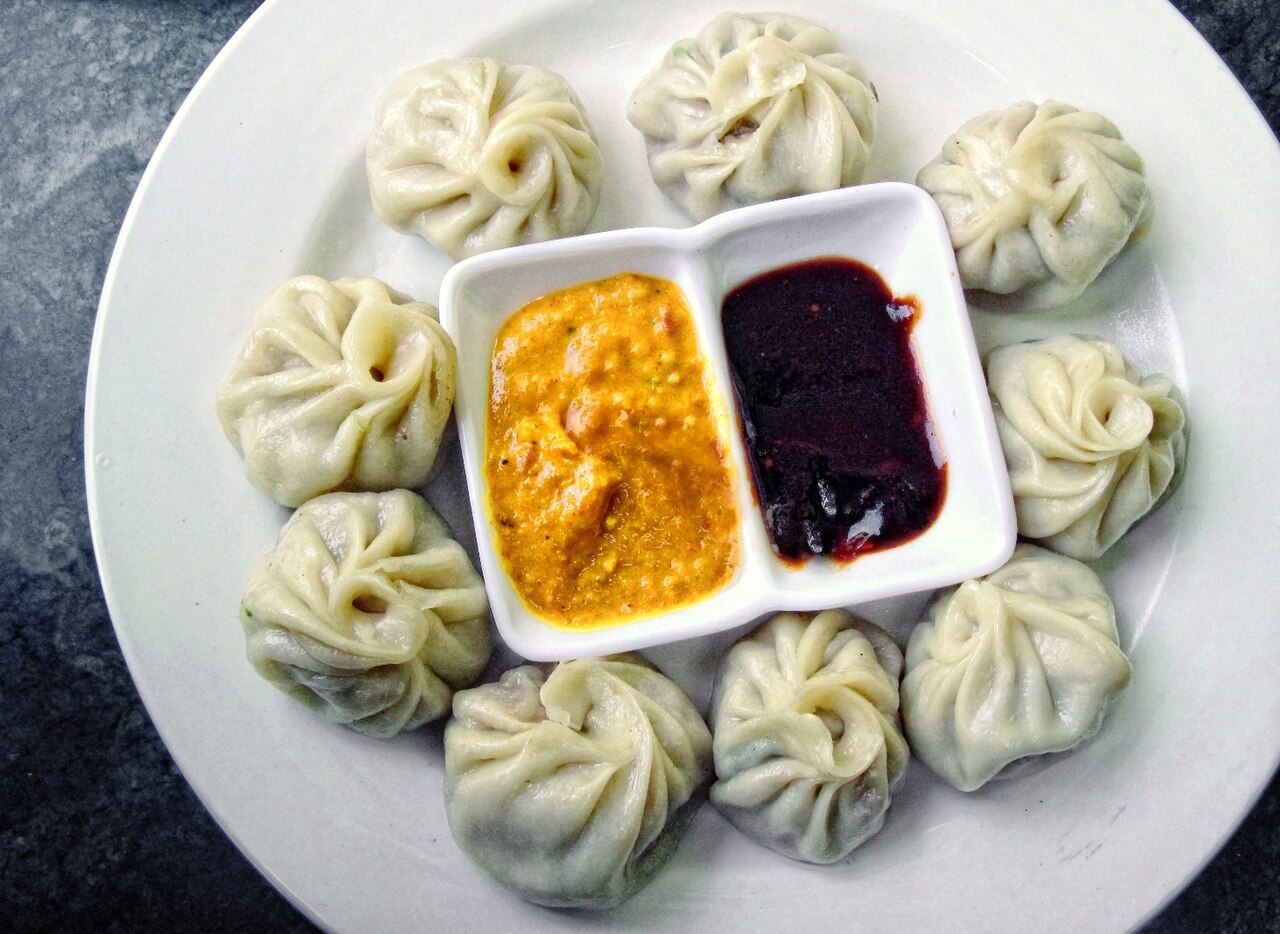
South Asian inspired street foods, think of these at your next Starport.


Momos are a type of steamed filled dumpling in Tibetan and Nepali cuisine that is also popular in neighbouring Bhutan, Bangladesh and India. The majority of Tibetan momos are half-moon in shape like jiaozi, while Nepali momos are normally round like baozi.[5][6] Momos are usually served with a sauce known as achar (Pickles) influenced by the spices and herbs used within many South Asian cuisines. It can also be used in soup, as in jhol momo and mokthuk.

Traditionally, momos are prepared with ground/minced meat, potatoes, and leek filling. Nowadays, the fillings have become more elaborate and momos are prepared with virtually any combination of ground meat, vegetables, tofu, mushrooms, paneer cheese, soft chhurpi (local hard cheese) and vegetable and meat combinations.

Samosas

A samosa (/səˈmoʊsə/) (listenⓘ) is a fried Indian pastry with a savoury filling that mostly consists of vegetables like spiced potatoes, onions, and peas, but can include cheese such as paneer (cottage cheese), meat or even fish. Its name originates from the Middle Persian word sambosag (سنبوسگ) (meaning 'triangular pastry'). It is made in different shapes, including triangular, cone, or crescent, depending on the region. Samosas are often accompanied by chutney, and have origins in medieval times or earlier. Sweet versions containing traditional Indian flavours or even chocolate are also made.
 
Back
Top