• Welcome to the new COTI server. We've moved the Citizens to a new server. Please let us know in the COTI Website issue forum if you find any problems.
  • We, the systems administration staff, apologize for this unexpected outage of the boards. We have resolved the root cause of the problem and there should be no further disruptions.

Low Tech vs Interstellar societies...

Which would you choose to use on some lower tech backwater world if you lived there?
  1. Can operate on Luna or Mars with minimal modifications ... so ... interplanetary environment viable. (y)
  2. Cannot generate power without plentiful gaseous O2 and liquid hydrocarbon supplies ... so ... NOT VIABLE on more than 1 planet at a time MOST planetary bodies in the galaxy. ❌
I'm going to go with Option 1 of the 2 provided ... 😅
 
About the ground infrastructure vs grav vehicles matter, and again resorting to MT (not sure if also for Striker), see that while the cost for most (if not all) MT listed vehicles are very expensive, because they respresent those for rough, usually self reliable and able to work with minimal infrastructure, but they can be built quite cheaper...

If you have access to it, I'd recommend you the article Affordable Transport, Part 2 (Budget Grav Vehicles) in Traveller Digest nº 20, page 41-43. There you'd find grav utilitarian vehicles well under the 6 digit prices...

You can see two examples (a grav bike and a grav APC) among my own designs (link in my signature).

If your grav utilitarian costs you about KCr 16 (against the KCr 275 of an air raft in IE), or a grav bike price is about KCr 5 (against the KCr 171 of a trasea in WHB) I guess most of your calculations are moot...

As I recall Striker, the grav vehicle design allowed relatively cheap variants.

Possibly too cheap, since the current rate is thirty kilostarbux per quarter tonne, speed and range varies to technological level constructed.

Air/ships, calculating in actual usable space, being a tenth of the cost.
 
I think about two years ago, I came to the conclusion that the hybrid would be the solution in North America.

Since this is a Traveller forum, the natural solution would be hydrogen.

However, like petroleum, it will depend on what energy distribution infrastructure the frontier world will initially invest in.

For the past half year, I've been thinking that what's needed is a petroleum powered automobile, without organic sensors and electronics, except as add ons.
 
Our current tech doesn't really work in cold areas such as Canada.
The TECH works.
The USERS of that tech are the clueless ones. 🤪

"There is no such thing as foolproof ... only fool RESISTANT ..." :mad:

If your statement were true, then Norway wouldn't be buying Battery Electric Vehicles (BEVs) at the rate that they are.
Trick question ... does Norway ever get cold ... like, at all ... maybe? :rolleyes:

LINK
BEVs made up 95.9% of new-car sales in Norway last year (2025).


I think about two years ago, I came to the conclusion that the hybrid would be the solution in North America.
There was a time when the hybrid might have been viable.
That time is now firmly in the rear view mirror and vanishing increasingly rapidly.
Since this is a Traveller forum, the natural solution would be hydrogen.
Hydrogen makes sense for fusion power.
It does NOT make sense(!) for chemical combustion power. 😖(n)
However, like petroleum, it will depend on what energy distribution infrastructure the frontier world will initially invest in.
Chemical combustion as a motive power source for vehicles only makes sense in a very limited band of (biosphere) environmental conditions and technology levels. Outside of those conditions, chemical combustion as a motive power source becomes absurdly wasteful/expensive.

Try running internal combustion engines on Luna (or Mars, or Venus) and see how far you get ... as well as try to work out how long the logistics supply chain "tail" would need to be. :eek:

Compare that to batteries, photovoltaics and nuclear power (fission, fusion, et al.) and watch how the supply chain changes (especially with In Situ Resource Utilization (ISRU) possible!).
For the past half year, I've been thinking that what's needed is a petroleum powered automobile, without organic sensors and electronics, except as add ons.
So ... you want a Blackberry in the Smart Phone era? :rolleyes:

6n71PUz.gif
 
The biggest question here, with regard to choosing what vehicles to use on a particular world in general everyday use, is

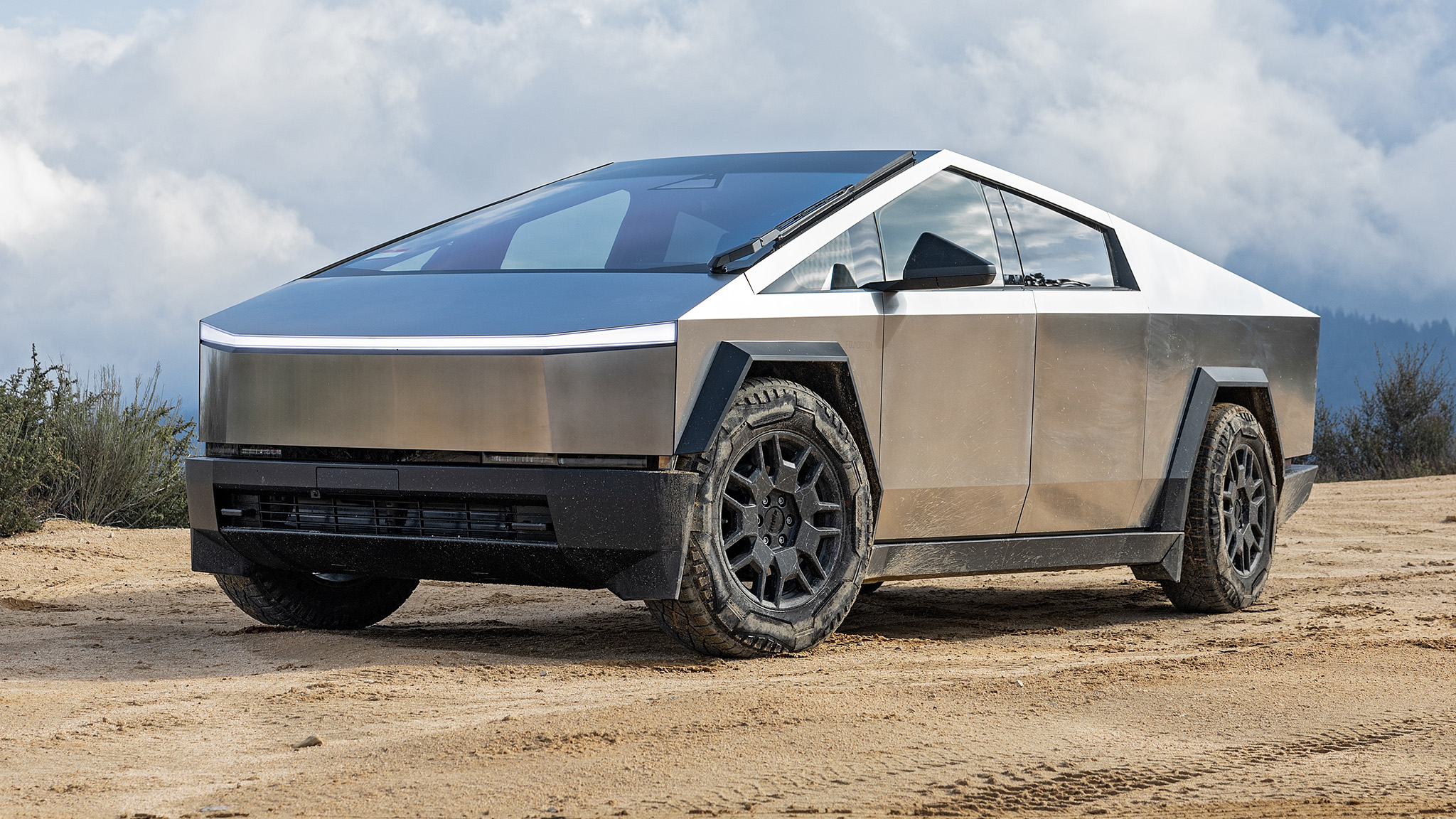
Can you fix it? If you have something that becomes useless junk the second something breaks on it versus something that is repairable locally, the repairable vehicle is likely to be the choice. Which would you choose to use on some lower tech backwater world if you lived there?

This:

1-2025-tesla-cybertruck-front-view.jpg


Or this:

1983-toyota-hilux-6563cb298f013.jpg
Never mind the tech level -- I want that Toyota!

Used to have a 2-door 4Runner. :)
 
So ... you want a Blackberry in the Smart Phone era?
I want a flippin' Handspring Treo. Since then, phones still do pretty much the same things -- just faster, prettier, and with more convenience.

And no, an on-screen keyboard isn't better than a hardware one.

Yes, video playback, too. Had to compress it and put it on an SD card, but it'd do it.
 
Last edited:
Electric no atmosphere based of whatever generation/storage systems are most likely simply because it’s the most portable and broad market mass production design option.
 
  1. Can operate on Luna or Mars with minimal modifications ... so ... interplanetary environment viable. (y)
  2. Cannot generate power without plentiful gaseous O2 and liquid hydrocarbon supplies ... so ... NOT VIABLE on more than 1 planet at a time MOST planetary bodies in the galaxy. ❌
I'm going to go with Option 1 of the 2 provided ... 😅
Actually, carbonaceous asteroids are the most common type in the universe, and these have lots of bound oxygen and hydrogen in them. The same goes for planets. Lack of an atmosphere doesn't necessarily mean lack of oxygen or hydrogen on them, water in the form of ice for example.

That means a closed cycle fuel cell would work just fine and with less energy needed per km, ground vehicles would have an advantage in that they require less fuel created to operate them.
 
It does NOT make sense(!) for chemical combustion power.
As I have not much idea about engines and poswer plants, wouldn't fuell cells make sense where fusion plants are not efficient (as small vehicles)? Traveller seems to point they are, but I don't know in real life...
 
As I have not much idea about engines and poswer plants, wouldn't fuell cells make sense where fusion plants are not efficient (as small vehicles)? Traveller seems to point they are, but I don't know in real life...
That's my view. The CT 'air raft' is supposed to be rated for 4 dt of cargo iirc. That's a large truck-sized vehicle. A passenger vehicle would likely need little more than a fuel cell needing a fraction of the power and range that the classic air raft requires.

Imagine, for example, on a vacuum or near vacuum world something like this being used:


With a fuel cell powerplant and the cabin being pressure tight, it would work well. Lots of room to get in an out of pressure suits or wear them in operation, runs on tracks or wheels depending on ground conditions. Works on soft ground on tracks. Carries 4 to 6 passengers and some cargo. Not overly expensive to purchase and most maintenance, if so designed, can be carried out from inside the vehicle.

That last is important. If something breaks down and you can fix it from inside in shirt sleeves, it's far easier than having to do so in a vac suit or environmental suit outside.

If it were made from something like 12 to 25mm polycarbonate or Kevlar plastic, it'd be nearly bulletproof. Great visibility from inside with the use of curtains or panels to blank off sections when required.

It really wouldn't require much in the way of roads either. A smoothed dirt track would suffice. If it went say 50 to 60 kph, it'd be perfectly fine for most short trips and daily use.
 
Back
Top