• Welcome to the new COTI server. We've moved the Citizens to a new server. Please let us know in the COTI Website issue forum if you find any problems.
  • We, the systems administration staff, apologize for this unexpected outage of the boards. We have resolved the root cause of the problem and there should be no further disruptions.

Low Tech vs Interstellar societies...

In a world with the tech level for autonomous driving :unsure: ... the "personal vehicle" is no longer required.
Instead, you have a subscription to a Transport as a Service (TaaS) company that owns and maintains the "air/raft fleet" and all the people have to do is rent/charter "air/rafts" from the fleet for durations/km ... and there's no need for millions BILLIONS of starbux to be spent on construction+maintenance of surface infrastructure connecting point to point (road, rail, etc.) locations.

My point being that you don't need "everyone" to shell out mega starbux for grav vehicles when transportation functions more like a (regulated) public utility (energy, water, etc.) rather than a personal investment per person/household.
Why bother? Have instead a mostly ground based system (cheaper) that is fully autonomous and controlled by AI using a very detailed scheduling program. You call a "cab" and it shows up within minutes. It takes you to your destination directly then goes to the next assigned call. Grav vehicles are only necessary if ground congestion reaches a point where it becomes a time consuming issue (aka traffic jams). There's ZERO need for flight when far cheaper wheeled vehicles fill the need.

Roads, and possibly railroads, would still be necessary simply because of the cost of hauling massive amounts of freight in volume and weight. Grav is not cost effective in most cases. Today, the average for freight trains on Earth runs between about 5,000 to 20,000 tons. If something like 75% of that is freight, you are into something the size of a major starship to haul it in one go. That gets really pricey for little gain.
 
Why bother? Have instead a mostly ground based system (cheaper) that is fully autonomous and controlled by AI using a very detailed scheduling program. You call a "cab" and it shows up within minutes. It takes you to your destination directly then goes to the next assigned call. Grav vehicles are only necessary if ground congestion reaches a point where it becomes a time consuming issue (aka traffic jams). There's ZERO need for flight when far cheaper wheeled vehicles fill the need.

Roads, and possibly railroads, would still be necessary simply because of the cost of hauling massive amounts of freight in volume and weight. Grav is not cost effective in most cases. Today, the average for freight trains on Earth runs between about 5,000 to 20,000 tons. If something like 75% of that is freight, you are into something the size of a major starship to haul it in one go. That gets really pricey for little gain.

Cheaper to tunnel, than to build grav car air lanes.
 
Grav vehicles are only necessary if ground congestion reaches a point where it becomes a time consuming issue (aka traffic jams). There's ZERO need for flight when far cheaper wheeled vehicles fill the need.
Wrong.

You're assuming that the road infrastructure is both already built and costs nothing to maintain.


Sure, a ground vehicle may cost Cr4000 per copy (LBB3.81, p21), while an air/raft may cost Cr600,000 per copy (LBB3.81, p23) ... and that sounds like major price advantage for the ground vehicle, right? :rolleyes:

Well, yes ... if you're comparing the price of the vehicles in isolation, you'd be absolutely correct.

But if you add the cost of infrastructure needed to the price of the vehicle (in this case, road) ... we can easily assign a price of MCr1 per km of roadway.

If you add in the price of road infrastructure to the cost of the ground vehicle(s) ... and then compare that to the cost of the air/rafts and the LACK of road infrastructure required ... the economic costs shift in favor of the air/raft.

And then you figure that most planets out there aren't going to have an atmosphere suitable for hydrocarbon combustion (O2 required!) and when initially colonized aren't going to have a legacy of roadways already sitting there waiting to be used.
 
Wrong.

You're assuming that the road infrastructure is both already built and costs nothing to maintain.

Actually, roads are pretty cheap. And that's for paved roads. Unpaved would be far cheaper.


On the other hand, with grav vehicles, particularly if there's heavy traffic, you'll need an air traffic control system capable of managing the vehicles in 3D.
Sure, a ground vehicle may cost Cr4000 per copy (LBB3.81, p21), while an air/raft may cost Cr600,000 per copy (LBB3.81, p23) ... and that sounds like major price advantage for the ground vehicle, right? :rolleyes:

Well, yes ... if you're comparing the price of the vehicles in isolation, you'd be absolutely correct.

But if you add the cost of infrastructure needed to the price of the vehicle (in this case, road) ... we can easily assign a price of MCr1 per km of roadway.

If the roads are basic, per KM of road in today's dollars could be as low as $300,000 per km. That'd be about $50,000 in LLB terms for CT when it was published. In urban areas, you'll still need paved streets in any case since the buildings won't be simply crammed together without viable access. So, you end up paying for streets and sidewalks in any case.

It also doesn't help if the average annual salary on some world is say, 50,000 cr. All of a sudden, you can't afford a grav vehicle any more than you could go out and buy some super car. On the other hand, that 4,000 cr ground vehicle looks awfully tempting...
If you add in the price of road infrastructure to the cost of the ground vehicle(s) ... and then compare that to the cost of the air/rafts and the LACK of road infrastructure required ... the economic costs shift in favor of the air/raft.

No, grav vehicles will end up more expensive. I would assume the requirements and training to fly and navigate a grav vehicle would be far greater and more expensive than teaching someone to drive a ground vehicle.
And then you figure that most planets out there aren't going to have an atmosphere suitable for hydrocarbon combustion (O2 required!) and when initially colonized aren't going to have a legacy of roadways already sitting there waiting to be used.
Batteries, hydrogen powered fuel cells, and the like would suffice for a ground vehicle in those cases. Having to install pressure domes, or build underground would again argue in favor of ground vehicles. These can tootle around in those environments easier than a grav vehicle.
 
Last edited:
On the other hand, with grav vehicles, particularly if there's heavy traffic, you'll need an air traffic control system capable of managing the vehicles in 3D.
* taps sign labeled AUTONOMOUS DRIVING @ TL=8+ *
Actually, roads are pretty cheap. And that's for paved roads. Unpaved would be far cheaper.
Not according to the link you provided.
ItemLowAverageHighNotes
Road Type$400,000$1,200,000$3,000,000Per mile; asphalt, concrete, or gravel base influence cost.
Per-mile range (typical)$800,000$2,500,000$6,000,000Assumes standard two-lane pavement in rural-to-suburban corridor.
If the roads are basic, per KM of road in today's dollars could be as low as $300,000 per km.
ONE LANE ... LOW quality "road" ... 400,000/1.609 = $248,602 per km ... pothole patches, guaranteed! 🤩(y)
If you want 2 lanes/bi-directional of low quality pavement, double the price (go figure, eh? :rolleyes:).
That'd be about $50,000 in LLB terms for CT
Sure ... I'll play in your sandbox.
You're working on a basis of $6 in 2026 = Cr1 in 1977 as you exchange rate equivalence.

If I go to the CPI Calculator, $1 in 1977 would be $5.39 in 2026 due to cumulative inflation.

Therefore, using the Average price for a two-lane pavement road (one lane each way) in 2026 pricing would compute out to being:
  • 2,500,000/1.609/5.39 = Cr288,267.17985912 per km
Therefore ... 1x Cr600,000 Air/Raft costs the same amount as 2.08km of average two-lanes paved roadway (bare minimum construction cost only).


At that point, you have to ask yourself ... which is better for the same amount of capital investment? :unsure:

1000x Air/Rafts for MCr600 that do not require any roads to be built?
Or 2080km of average two-lane paved roadways that you need to spend even more capital on in order to populate those roadways with ground cars?

How big of an "urban" settlement can you have (and thus, how large of a population can you have?) that requires a mere 2080km of average two-lane paved roadways? :unsure:

Depending on your "urban density assumption(s)" you can wind up with anything between 6km of roadway/km2 of land area to 10x that density.
  • 2080 / 6 = ~346.67km2 ... 18.62km x 18.62km square
  • 2080 / 60 = ~34.667km2 ... 5.89km x 5.89km square


I dunno about you, but I'm thinking that 1000x Air/Rafts operating on a Transport as a Service (TaaS) business model of 3D public utility gravitic transport would be easier/cheaper to construct and maintain than ~2000km of average two-lane roadways that you still need to pay MORE for in order to buy ground cars to populate those (average, two-lane) roadways with. :rolleyes:

Your mileage may vary, of course. 😅


My point is ... the price of a ground car (Cr4000) externalizes the cost of public infrastructure (roads) ... while the price of an air/raft (Cr600,000) DELETES the cost of public infrastructure (roads) in order to get where you need to go.

Once you have to "buy the roads" for the ground car(s) to drive upon and factor that into the pricing of both vehicles ... ground car+roads isn't quite so economical anymore.

Your mileage may vary, of course. 😅
 
A better way to interpret tech levels (high or low) is that whatever tech level appears in a UWP code is a measure of the technologies that are both "common" and SUPPORTABLE by the local population. So it's more of a representation of an equilibrium state rather than a "this is where we've planted our flag and you can't make us move" type of deal. The tech level in a UWP code is what can be sustained and maintained locally, or is common enough (because of imports?) that it's a reasonable assumption to encounter items of that tech level in "pervasive quantities" within the society.
Remember that TL is at the starport, etc., and if often 1-2TLs lower in the 'backblocks' of the world. To me that implies that often the 'locally sustainable' TL is not the listed TL of the world, and that the listed TL is which exists in quantity at the starport, a combination of local and imported goods, supported by local repair capability.
 
My point is ... the price of a ground car (Cr4000) externalizes the cost of public infrastructure (roads) ... while the price of an air/raft (Cr600,000) DELETES the cost of public infrastructure (roads) in order to get where you need to go.

Once you have to "buy the roads" for the ground car(s) to drive upon and factor that into the pricing of both vehicles ... ground car+roads isn't quite so economical anymore.
With the grav vehicle option you also don't need to rebuild your large chunks of your infrastructure when your community grows and changes and starts having to move heavy loads - you need a much better grade of road for heavy trucks than you do for cars, and the maintencne costs for such roads is higher, too. For a grav system, you just need to put the changed performance, landing pad requirements, etc. into the traffic control system and off you go.
 
How I imagine frontier worlds that need backwoods/country roads, is that using local materials, they just dig out a section of said countryside, and pound dirt tight, including organic fibre.

Urban and suburban areas will likely get paved roads.
 
How I imagine frontier worlds that need backwoods/country roads, is that using local materials, they just dig out a section of said countryside, and pound dirt tight, including organic fibre.
That only works for very low rates of use by relatively light (and probably off-road capable) vehicles, and for stock being moved on foot. Out any real traffic density on it and it won't be a road any more.
 
So I'm confused. Are we talking Pop 4 planets with a few thousand people spread out over the surface, or Pop 9 worlds with cities with more pop than some planets? A Pop 4 planet can probably get by with dirt roads, they haven't got enough traffic to overburden them. These things are all interwoven. Large pops need higher TL to sustain them. And higher TLs need larger pops to sustain them also, so it works out nicely.

Now lower TL ground cars fueled by petroleum need a certain amount of infrastructure, too, and a prehistory where dinosaurs die but bacteria haven't evolved yet to decay them. But since we're transplanting, I'd ship electric cars with solar-electric charging stations, and if it's TL 8 and not locally supportable, it's at least usable without requiring major infrastructure or hundreds of millions of years of specific prehistory and a major industrial investment.

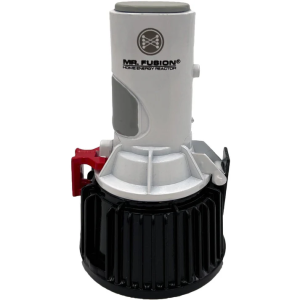
Alternately, this looks like a good place for Mr. Fusion.

1773318257067.png
 
Last edited:
Remember that TL is at the starport, etc., and if often 1-2TLs lower in the 'backblocks' of the world. To me that implies that often the 'locally sustainable' TL is not the listed TL of the world, and that the listed TL is which exists in quantity at the starport, a combination of local and imported goods, supported by local repair capability.
CITATION REQUIRED. :cautious:

Here is my citation ... from LBB3.81, p7-8:
TECHNOLOGICAL LEVEL
The degree of technological expertise, and thus the capabilities of local industry, depends greatly on the basic characteristics of a world. This technological index is generated based on a one die throw, modified by DMs dependent on planetary characteristics.

Consult the tech level table and reference the appropriate planetary digits with the descriptions; note all DMs indicated, and sum them to form one total DM. Throw one die, and modify the result, thus determining the local technological level. Note the result in the appropriate records.

Technological index may vary from zero to 20, more commonly ranging from 4 through about 10. Higher numbers indicate greater capability.

The technological level is used in conjunction with the technological level table to determine the general quality and capability of local industry. The tables indicate the general types or categories of goods in general use on the world. In most cases, such goods are the best which may be produced locally, although better goods may be imported by local organizations or businesses when a specific need is felt. In most cases, local citizenry will not be armed with weapons of a type which cannot be produced locally, although police or military may be. Technological level also indicates the general ability of local technology to repair or maintain items which have failed or malfunctioned.

The technological level tables have several spaces or holes, and such gaps should be filled in by the referee or the players when they discover items or devices of interest.
So ... when I say ...


Remember that TL is at the starport, etc., and if often 1-2TLs lower in the 'backblocks' of the world.
Wrong. :cautious:
To me that implies that often the 'locally sustainable' TL is not the listed TL of the world
Wrong. :cautious:
the listed TL is which exists in quantity at the starport
Wrong. :cautious:
a combination of local and imported goods, supported by local repair capability.
Debatable ... so not quite as wrong as everything else you've been asserting. 😓


I say that ... because ... and I quote directly from LBB3.81 to support my position ... 🤓
The degree of technological expertise, and thus the capabilities of local industry,
The technological level is used in conjunction with the technological level table to determine the general quality and capability of local industry.
The tables indicate the general types or categories of goods in general use on the world.
In most cases, such goods are the best which may be produced locally, although better goods may be imported by local organizations or businesses when a specific need is felt.
In most cases, local citizenry will not be armed with weapons of a type which cannot be produced locally, although police or military may be.
Technological level also indicates the general ability of local technology to repair or maintain items which have failed or malfunctioned.

I therefore challenge you, @Rupert ... to read the passage from LBB3.81, p7-8 ... quoted in its entirety ... and find the word "starport" ... or even (head fakes/suggestive winking in the direction of) the notion that UWP tech level codes are somehow "limited to" what can be found at the starport, while the rest of the world is automagically (without exception!) -1 to -2 TL below the UWP tech level code for that world (don't even TRY to match the tech level available at the starport! 😤) like you've assumed/asserted.

"If none of this makes sense to you, it may already be too late."
- Shadoevision
 
hate to jump in, but:

Technological level also indicates the general ability of local technology to repair or maintain items which have failed or malfunctioned.

reading between the lines, that could support the supposition of higher TL around the port. It does not say absolute ability. Why I like the latter world building stuff (outside of CT so not directly applicable) where TLs for specific industries can vary a bit.

Anyway, I feel the use of general implies there can be some variety.
 
Where can I get a LBB:2 ship with Z drives built?

According to LBB:2 any type A starport can build a ship with any drive from A to Z.

Does the local world TL affect this? No, not under LBB:2 rules.

So how does that A class starport get a model 7 computer ans type Z drives when the local world is TL6? Doe it manufacture them, does it import them? Who knows, we are not told.

We are told any type A starport can build any ship with any drive A to Z.

How about maintenance and repair?

I can take my type Z drive starship with its model 7 computer to any world with an A or B starport. So every A and B starport has the facilities, knowledge and where withal to conduct annual maintenance, regardless of local world TL.

So it there technology available at the starport higher than the local world TL...
 
So I'm confused. Are we talking Pop 4 planets with a few thousand people spread out over the surface, or Pop 9 worlds with cities with more pop than some planets? A Pop 4 planet can probably get by with dirt roads, they haven't got enough traffic to overburden them. These things are all interwoven. Large pops need higher TL to sustain them.

IMHO this would depend on may things...

A POP 4 planet (let's say about 5000 people) may mean a single town planet (let's say a miners settlement) or many small villages/camps, or even mobile pop (let's think on bedouins, moving in groups of a few hundreds). If the former, they can do with a small road network, while in the latter they may not need them, moving on all terrain means (be them animals or ground or grav vehicles, depending on TL).

Also, again this could be the permanent POP, while havinga a very large non-permanent oen who is not accounted on it (let's think, again, on Diego Garcia island).
 
Last edited:
NOTE: ALL WITH i'LL SAY NOW COMES FROM MEGATRAVELLER:

Remember that TL is at the starport, etc., and if often 1-2TLs lower in the 'backblocks' of the world.
ITTR (but I cannot give you teh standard quote) that, even in Hard Times (so after the 3I collapse) there was a minimum TL for teh starport area, despite the UWP TL. If my memory does not fail, for Starport A this was TL 9, and for Starport B it was TL 7.

This has some logics, as to produce starships (and so qualify for Starport A) you need access to jump tech (so TL9), and to build spaceships minimum TL is 7...
To me that implies that often the 'locally sustainable' TL is not the listed TL of the world, and that the listed TL is which exists in quantity at the starport, a combination of local and imported goods, supported by local repair capability.
I'd again would refer you to MT:WHB for this, and the differences among standard TL, prototype TL and Novelty TL...
 
About the ground infrastructure vs grav vehicles matter, and again resorting to MT (not sure if also for Striker), see that while the cost for most (if not all) MT listed vehicles are very expensive, because they respresent those for rough, usually self reliable and able to work with minimal infrastructure, but they can be built quite cheaper...

If you have access to it, I'd recommend you the article Affordable Transport, Part 2 (Budget Grav Vehicles) in Traveller Digest nº 20, page 41-43. There you'd find grav utilitarian vehicles well under the 6 digit prices...

You can see two examples (a grav bike and a grav APC) among my own designs (link in my signature).

If your grav utilitarian costs you about KCr 16 (against the KCr 275 of an air raft in IE), or a grav bike price is about KCr 5 (against the KCr 171 of a trasea in WHB) I guess most of your calculations are moot...
 
The biggest question here, with regard to choosing what vehicles to use on a particular world in general everyday use, is

Can you fix it? If you have something that becomes useless junk the second something breaks on it versus something that is repairable locally, the repairable vehicle is likely to be the choice. Which would you choose to use on some lower tech backwater world if you lived there?

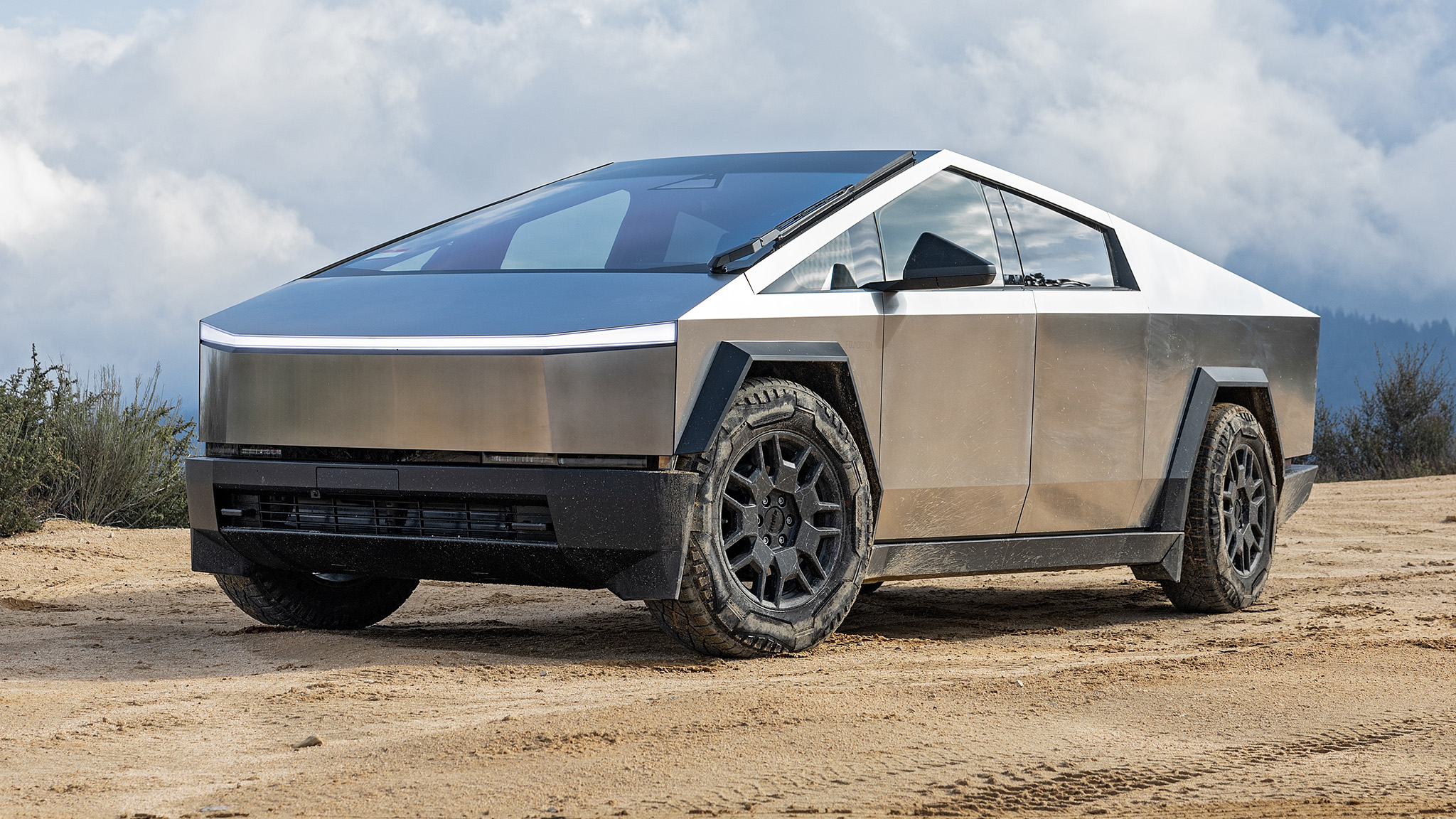
This:

1-2025-tesla-cybertruck-front-view.jpg


Or this:

1983-toyota-hilux-6563cb298f013.jpg
 
Back
Top