• Welcome to the new COTI server. We've moved the Citizens to a new server. Please let us know in the COTI Website issue forum if you find any problems.
  • We, the systems administration staff, apologize for this unexpected outage of the boards. We have resolved the root cause of the problem and there should be no further disruptions.

Low Tech vs Interstellar societies...

H06c528c8fd9348de8befb05f05ad4c652.jpg


Which is why you have kids.
 
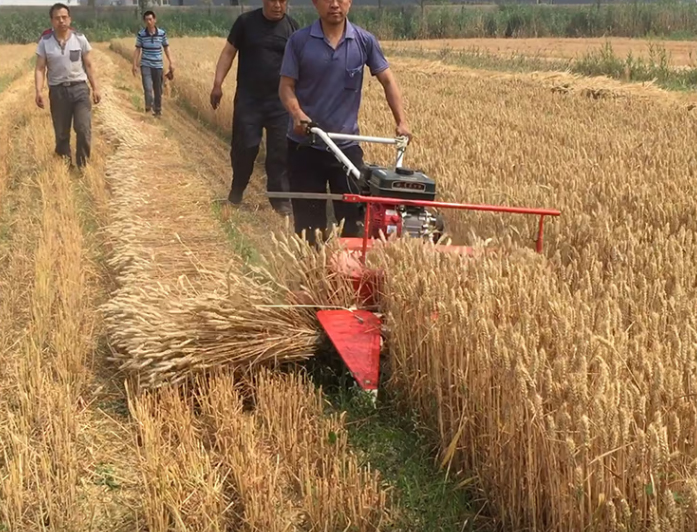
What does that buy them locally? If you are buying a 1 million Cr grav harvester versus a 100,000 Cr TL 7 harvester is it worth ten times the cost? If local labor is cheap due to a lack of alternative jobs to agriculture, wouldn't the lower cost harvester plus cheap labor be a better deal?

Exports or not, sometimes better technology isn't the correct solution to a problem.

The fact that we can have nail guns doesn’t stop hammer and nails from use. The option is there and funded when it makes sense.

TL also means general items in use so apparently the locals are well off enough to broadly afford medical/transport/computer tech above our current level.
 
What does that buy them locally? If you are buying a 1 million Cr grav harvester versus a 100,000 Cr TL 7 harvester is it worth ten times the cost? If local labor is cheap due to a lack of alternative jobs to agriculture, wouldn't the lower cost harvester plus cheap labor be a better deal?

Exports or not, sometimes better technology isn't the correct solution to a problem.
It seems like there is room for something in the middle here. I took a look online and found: IOF's and Corporate Businesses. On a Low Pop/Non Ind high tech world, the higher tech could cause the lower population to act like an Ag world, with most, if not all, of the population working for the IOF or CB that owns the farms on the world.

Traveller doesn't have a system for this to work, so it would be something like a house rule. I remember a scene in one of the Star Wars novels, where someone was on a Agri-world with many fields being harvested by robot harvester machines. Hadn't really thought about it until now, about how something might be possible or necessary, like in a Traveller setting.

Going the other way, how much population would a low tech world need to have a viable off world agricultural presence, if they were part of an interstellar trading route?
 
While a perfect justification for a lot of TL5 planets, I view something like a nonindustrial agricultural TL10 world with grav harvesters as a statement of economic export clout.

The planet has enough profitable exports to afford importing the good stuff, so we can expect one or more high value crops or dependent meats or animals and they are amenable to automated equipment, especially being a low pop world.

Or the high tech allows freshly harvested preservation that increases shipping value.
I think that shows up in the World Generation.. the 2 main determinants for TL are Population (ie local resources) and Starport (ie offworld resources). you get a TL by building it or importing it.
 
It seems like there is room for something in the middle here. I took a look online and found: IOF's and Corporate Businesses. On a Low Pop/Non Ind high tech world, the higher tech could cause the lower population to act like an Ag world, with most, if not all, of the population working for the IOF or CB that owns the farms on the world.

Traveller doesn't have a system for this to work, so it would be something like a house rule. I remember a scene in one of the Star Wars novels, where someone was on a Agri-world with many fields being harvested by robot harvester machines. Hadn't really thought about it until now, about how something might be possible or necessary, like in a Traveller setting.

Going the other way, how much population would a low tech world need to have a viable off world agricultural presence, if they were part of an interstellar trading route?
That argues for something like the Hacienda or Plantation system to be in place. It would be the agricultural equivalent of a mining "company" town. Both would be situations where the corporation owns virtually everything, including the sentient population if not by deed on paper, certainly simply by controlling and owning virtually all businesses and the means of import and export.

In those settings, if robots were doing most of the manual labor, sophants would only be necessary for managerial and administrative tasks along with technical ones like overseeing robot operations or complex repairs and programming. The only other need would be for staff to support those workers like cooks and such. There'd be little reason for a "free" economy, and one might expect the staff to be on contract for set time periods before being rotated out.

One result is that the government would normally be a 1 (company) or 5 (technocracy), or if a government owned the operation then probably an 8 (civil service bureaucracy)
 
Last edited:
The fact that we can have nail guns doesn’t stop hammer and nails from use. The option is there and funded when it makes sense.

TL also means general items in use so apparently the locals are well off enough to broadly afford medical/transport/computer tech above our current level.
But that, in turn, means the locals need compressed air or electricity to make the nail guns work. They'd also now need the factory produced nail strips the gun uses along with possibly oil for regularly lubricating the gun.

On the other hand, having one machine like this locally and importing only wire for it, means you can make numerous sizes of nails in quantity.

OIP.altxYNYiTqLMfLE4ZbnG8gAAAA


While you would expect it to normally be electrically powered, steam or water would be alternatives. Hammering nails may be a bit slower, but no power is needed on site to drive them other than muscle.

Of course, it might be cheaper to just import the nails by the barrel since they would have an unlimited shelf life. Anything that has a long shelf life is pretty ubiquitous, and isn't too bulky, would be easier to import than produce locally I'd think on a low pop world. This is where the small trade ship with a cargo capacity of 100 to 500 tons would be a perfect fit. It runs on a set schedule arriving at the planet say every 4 to 12 months and delivers a set load of cargo picking up what the locals export, if anything.

That gives the low pop planet a balance of trade they can sustain.
 
Now, another alternative with low-tech, low pop worlds is combining the company town / operation, be it agriculture, mining, or something else, with the use of 'transport' of convicts, impressed or indentured workers, or outright slaves. These might be cheaper than using robots and high technology to do some menial task that is vital to the operation.

I could see the 'management' and free staff, in any of those situations, including a small detachment of government troops with fairly high-tech equipment and weapons to ensure that the workforce remains passive and busy. This group lives comfortably and well while those 'sentenced' to the equivalent of the gulag (aka labor camp) work themselves to near death in harsh conditions. They might also know that back wherever they came from their families and relatives are only safe from a similar fate if they produce and fill their contract or time of servitude.

This might be why when you are rolling up your character as a marine or army choice you get shipped off to 'prison guard duty' for a term or two.

An example of this might be a world (low pop) that is marginally habitable non-industrial, non-agricultural, but is covered in large swaths with the equivalent of trees that provide lumber and other products. Robots might be unsuitable for use for whatever reason(s) so sophants are sent in. The work is dangerous, brutally hard, and conditions are miserable. The workforce is a mix of convicts and poor that opted to contract for the work along with a management and overseer force.

The convicts get the worst jobs and also get the worst treatment. The contract workers get better jobs and conditions. The management and overseers live in relative comfort. Anger the overseers / guards and you end up paste at the end of their plasma rifles.
 
Last edited:
But that, in turn, means the locals need compressed air or electricity to make the nail guns work. They'd also now need the factory produced nail strips the gun uses along with possibly oil for regularly lubricating the gun.

On the other hand, having one machine like this locally and importing only wire for it, means you can make numerous sizes of nails in quantity.

OIP.altxYNYiTqLMfLE4ZbnG8gAAAA


While you would expect it to normally be electrically powered, steam or water would be alternatives. Hammering nails may be a bit slower, but no power is needed on site to drive them other than muscle.

Of course, it might be cheaper to just import the nails by the barrel since they would have an unlimited shelf life. Anything that has a long shelf life is pretty ubiquitous, and isn't too bulky, would be easier to import than produce locally I'd think on a low pop world. This is where the small trade ship with a cargo capacity of 100 to 500 tons would be a perfect fit. It runs on a set schedule arriving at the planet say every 4 to 12 months and delivers a set load of cargo picking up what the locals export, if anything.

That gives the low pop planet a balance of trade they can sustain.


If they use hammers cause that’s all they need, they won’t have nail guns. If they have a use case where someone is nailing on an industrial level, they can afford the system shipped in.

It’s a function of how much labor/productivity the imported tool provides vs cost. As per that world rating, it’s got the economy to justify and pay for it.

If it’s TL5, the muscle driven hammer and small scale nail cutter will have to do. Even then the TL5 nail maker likely got imported as there isn’t sufficient population and maybe local metals to sustain a foundry and skill in making the device.
 
A low tech society is low tech because it wishes to be low tech, for whatever reason.

Either that, or they're simply too poor to buy the tech they want.

If the population is sitting on a exploitable resource that someone else would want, that someone would try to come and get it. They would negotiate with the native population, and they would bring in the most efficient tech necessary to do the extraction. Whether that's simply more shovel or power loaders, who's to say.

The key point is that markets as a general rule don't like being "low tech". Technology brings opportunities and new markets, and there's dTons worth of capital in the Galaxy willing to leverage itself to make more wealth.

Like resource extraction, whatever tech is necessary to support and grow the market, will be imported.

If there is no market, then nothings coming in. The tech that comes in is there to fill a need and a vacuum.

Small pop world, small markets. "The mine" might be the only market for tech, imported by the Company to exploit the mine, because of the larger, external market, that the mine feeds. So, the mine is TL12 with it vehicles, mining lasers, fusion powered processing machines, C class ore hauling starport, the local machine shop to support all of these things. Meanwhile, the local workers are coming in on horseback. But at least they have company provided cell phones and other wireless infotainment devices (for only 9.99Cr per month!), and antibiotics from the mines medical center.
 
A low tech society is low tech because it wishes to be low tech, for whatever reason.

Either that, or they're simply too poor to buy the tech they want.

If the population is sitting on a exploitable resource that someone else would want, that someone would try to come and get it. They would negotiate with the native population, and they would bring in the most efficient tech necessary to do the extraction. Whether that's simply more shovel or power loaders, who's to say.

The key point is that markets as a general rule don't like being "low tech". Technology brings opportunities and new markets, and there's dTons worth of capital in the Galaxy willing to leverage itself to make more wealth.

Like resource extraction, whatever tech is necessary to support and grow the market, will be imported.

If there is no market, then nothings coming in. The tech that comes in is there to fill a need and a vacuum.

Small pop world, small markets. "The mine" might be the only market for tech, imported by the Company to exploit the mine, because of the larger, external market, that the mine feeds. So, the mine is TL12 with it vehicles, mining lasers, fusion powered processing machines, C class ore hauling starport, the local machine shop to support all of these things. Meanwhile, the local workers are coming in on horseback. But at least they have company provided cell phones and other wireless infotainment devices (for only 9.99Cr per month!), and antibiotics from the mines medical center.
Another potential low tech world reason is that the world specializes in something that is low tech but demands a good price. For example, handmade furniture, clothing, or art. Or they are a resort world for say, hunters and sportsmen. In these cases, there could be a very high-tech resort or other amenities in a town or near the starport, while the other 95%+ of the world remains low-tech. In these cases, the rating would be because the world is almost entirely low-tech on purpose but has high-tech amenities available for customers and buyers who might demand them.

 
If they use hammers cause that’s all they need, they won’t have nail guns.
I find this to be a naive perspective.

The reason why nail guns "exist" is not about "making a better hammer" (or words to that effect) ... it's about reducing the COST OF LABOR in construction.

While labor cost is highly dependent on time spent during work, a nail gun that can drive nails in less than one second will dramatically reduce the amount of TIME that labor needs to spend on a construction project, reducing the COST of that construction project. This is why nail guns "took over" the Stick Frame construction industry in a lot of places on the Solomani homeworld (historically speaking, of course). Nail gun usage saved money in labor costs that allowed for marginal profit advantages to business operations. It was a specialized technology that functioned as a labor SAVING device, rather than a labor REPLACING device (the labor replacement would be robotics developed at higher tech levels).
A low tech society is low tech because it wishes to be low tech, for whatever reason.
This implies a "choice" in the matter.
We're poor because we CHOOSE to be POOR.
We're low tech because we CHOOSE to be LOW TECH.

Tech levels on world are not a matter of "multiple choice, pick one" ... even if the randomized UWP code generation system of LBB3/6 makes it SEEM that way (because, 1d6+DM stack).

A better way to interpret tech levels (high or low) is that whatever tech level appears in a UWP code is a measure of the technologies that are both "common" and SUPPORTABLE by the local population. So it's more of a representation of an equilibrium state rather than a "this is where we've planted our flag and you can't make us move" type of deal. The tech level in a UWP code is what can be sustained and maintained locally, or is common enough (because of imports?) that it's a reasonable assumption to encounter items of that tech level in "pervasive quantities" within the society.

And then there are Die Back Worlds ... where the technology remains, but the sophonts have gone extinct.
Consider that during the Long Night (or any similar civilizational collapse event), MOST of the locations in Charted Space would not have native biosphere capable of supporting biological life "indefinitely" as a byproduct of that biosphere. In other words, MOST settlement locations would not have been a Garden World hospitable to life and large populations of inhabitants.

If you look at a location such as the Spinward Marches and determine that every world which isn't a Garden World, Agricultural or Industrial would become (over the course of a century) a Die Back World in the absence of interstellar trade ... the number of populated worlds drops off a cliff in the Spinward Marches sector. The population on MOST of the worlds in the sector would "crater" over the course of a century, due to a lack of interstellar trade supporting their populations, just in subsistence life support terms.
If the population is sitting on a exploitable resource that someone else would want, that someone would try to come and get it. They would negotiate with the native population, and they would bring in the most efficient tech necessary to do the extraction. Whether that's simply more shovel or power loaders, who's to say.
Most of the time ... an exploitable resource (of some variety) is REQUIRED for colonization to even be worth the effort involved. However, doing a "snatch & grab" of somebody else's stuff™ isn't always a practical idea (see: the economics of Piracy).

For example:
While orbital launch costs per kg are high ... even if low orbit was made of a shell of PUREST GOLD ... it wouldn't be economical to build an industry in which it costs MORE to launch a craft to harvest that gold from orbit than the value the gold would have after being brought down to the surface.

Solution?
Lower the launch costs per kg to the point where it BECOMES economical to harvest pure gold from the planetary shell in low orbit.

Easy to SAY ... not at all easy to DO.

Same deal applies to interplanetary colonization.
Interstellar colonization just makes the logistics routing EVEN LONGER and the costs involved EVEN HIGHER.

However, @whartung I think that what you're ultimately getting at is the necessity for a Deterrence Factor™ where once something "valuable" is found and exploitation of that something begins ... there needs to be a way to fend off competitors/interlopers/claim jumpers/corrupt interests who would simply want to steal it for themselves (and profit accordingly). The means to do so can be anything from legal to kinetic to logistical to obscurity (or better yet, a combination all of those plus more hoops to jump through). At that point though, the question changes into one of "at what price, Security?" ... because security doesn't come in a package labeled "freebie" ... and then you have to include "security expenses" into the financial calculus that measures profitability of the venture. :unsure:

Spoiler alert: "unprofitable" ventures are not sustainable, long term.
Short term, maybe ... long term, no. :cautious:
 
iu


iu


Wedgies and butts.

Sure, lower tech doesn’t mean worse or cannot build. But it means pop enough to spend the labor on intensive ways and needs slow enough for it.

Perhaps the world values buildings made of local wood with such techniques and well enough to last for generations and so won’t utilize rapid nail gun use.

Or maybe they need the ability to construct thousands of low cost domiciles because of natural damage or migration or seasonal harvest patterns, and so would use it.

Different use cases.
 
1. Outside of the comedic aspects of the issue, I have had thoughts on why you might choose low technological solutions.

2. Any increases in efficiency cannot really affect production cost, or quality.

3. I had a couple of tries at designing vehicles, going by my issues of the mass surveillance state, and planned obsolescence, I'd try for a six or seven technological level automobile.

4. If there is no regional road or rail infrastructure, a lot of traffic is going to be by air.

5. Not everyone is going to want shell out a quarter of a million starbux for a family sedan in the form of an air/raft.

6. I had a look around, and came to the conclusion that air/ships are going to become rather popular.

7. And for basic construction, not necessarily controls or sensors, that would be somewhere between technological levels five to seven.
 
And then there's construction techniques in which "nail" type fasteners would be detrimental, rather than beneficial.
Seismic protection, for example, requires flexibility ... which nails/screws as fasteners would prevent from being possible.


There might not be wood or equivalent at all- it was just a simple tool example.
 
5. Not everyone is going to want shell out a quarter of a million starbux for a family sedan in the form of an air/raft.
In a world with the tech level for autonomous driving :unsure: ... the "personal vehicle" is no longer required.
Instead, you have a subscription to a Transport as a Service (TaaS) company that owns and maintains the "air/raft fleet" and all the people have to do is rent/charter "air/rafts" from the fleet for durations/km ... and there's no need for millions BILLIONS of starbux to be spent on construction+maintenance of surface infrastructure connecting point to point (road, rail, etc.) locations.

My point being that you don't need "everyone" to shell out mega starbux for grav vehicles when transportation functions more like a (regulated) public utility (energy, water, etc.) rather than a personal investment per person/household.
 
There are many parts of Earth that have a much lower tech level than we do in the USA or Europe. You can argue some other countries such as Japan have a higher tech level than most of the USA or Europe.

Even within the USA you will great variances of technology in common use.

Some are for religious reason such as the Amish, but most are economic reasons people in many countries cannot afford the latest advanced equipment. Then there are those that just prefer older technology. They want a physical paper book instead of an e-reader or a 60 year car instead of modern vehicle.

also do not discount social pressures. if the rest of the community use wheeled battery powered vehicles, your fusion powered grav vehicle may not be well received and you could find yourself shunned.
 
Back
Top