Condottiere
SOC-14 5K
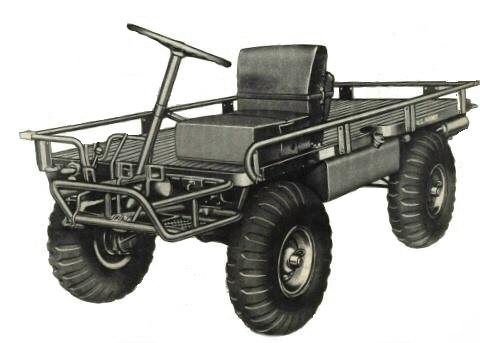
Mobile rations.

I have been posting interesting tidbits from the U.S. Army official history of World War 2 in my thread of New Years Resolutions, but this one I thought would be good here.
They were used in the mountainous areas of Italy as the only way to supply the units consistently. From the Quartermaster Corps in the War Against Germany.
Side Note: As a former Quartermaster officer, I keep thinking that an appropriate coat of arms would be a pack mule.
View attachment 4215



A collection of Private Snafu cartoons from 1943–1946 is also available as .zip archives, either in H.264 IA format or in MPEG 4 format.Here is a change of pace. A couple of cartoons produced in World War 2, […]
Found them on archive.org. Thanks for reminding me of them.A collection of Private Snafu cartoons from 1943–1946 is also available as .zip archives, either in H.264 IA format or in MPEG 4 format.
The book can be found on archive.org, and does present a very different view than the standard histories of the Flying Tigers. Unfortunately, neither of the two copies are in copy and paste format, so if you want that, you will have to run them through an OCR program like I did. For a brief history of the AVG, you can go here.Generals Scott [Commander-in-Chief of the British Frontier Force of the Burma Division] and McLeod [then Commander-in-Chief of the Burma forces] were two as charming gentlemen as you'd wish to meet—mannerly, interesting when they wanted to be, honorable to the nth degree. But I was afraid that they hadn't the faintest idea of what was going on right under their noses—or of what the terrible future held in store for them. They honestly anticipated no trouble from the Japanese. Subsequent events proved their forces were woefully inadequate, that the loyalty of the Burmese troops was questionable. They did not know, as was proven later, that the Burmese were sheltering dozens and scores of Japs who mingled with the natives dressed as Burmans and were making themselves generally useful to the Emperor. These two charming gentlemen knew Singapore was impregnable, that Britanaia ruled the waves and that the Japanese were much too smart to ever attempt to challenge the authority of their white masters. These things they knew for sure. No amount of argument or logic could have changed their opinions one single little jot. And these were the men who held in their hands the destiny of China's precarious life line, the Burma Road!

But I was afraid that they hadn't the faintest idea of what was going on right under their noses—or of what the terrible future held in store for them. They honestly anticipated no trouble from the Japanese. Subsequent events proved their forces were woefully inadequate, that the loyalty of the Burmese troops was questionable.
[...]
These two charming gentlemen knew Singapore was impregnable, that Britanaia ruled the waves and that the Japanese were much too smart to ever attempt to challenge the authority of their white masters. These things they knew for sure. No amount of argument or logic could have changed their opinions one single little jot.
You can chalk that up to Neville Chamberlain, the Chancellor of the Exchequer from November of 1931 to May of 1937, at which point he became Prime Minister. History knows how that turned out.The British were playing for time, the one resource you shouldn't waste, and can't recover.
They should have gone for continuous rearmament, instead of setting up a policy that assumed that they can see a war coming in ten years, and prepare for it.
Emphasis added.And of the miscellaneous French and Spanish hangers-on of the Court—ministers, courtiers, clerks, commissaries, contractors, and the ladies who in legitimate or illegitimate capacities followed them—few had dared to go off unescorted on an early start.
That is fantastic that they still had their maps.I used to give some vets at the rest home near me a ride down to the VFW for baked steak night, and one guy was a Ranger at D Day, and he was talking about his map, and another down the table, said he was Airborne there and he had a map too. Next time they both brought in their maps, they were in map cases with a clear cover, and transcribed from photo-recon, they had every tree, house, rock, ditch, and everything. They said if you unfolded them, they were as big as a room. Pretty amazing to see D Day that up close.
Grid coordinates Vertical and Horizontal (X and Y). Until GPS came along you used either the M16 Plotting Board or a Graphic Firing Fan to calculate the range to target. We also had target reference points (i.e. a crossroads or other physical feature) so that we could fire quickly when the fire request came in.I think they had numbers on them for registering fire.
When Count von Bernstorff was handed his passports in the spring of 1917, the Signal Corps consisted of barely 50 officers and about 2,500 men. When, nineteen months later, the German delegates, standing about a table in Marshal Foch’s private car, sullenly affixed their signatures to the Armistice, the corps had grown to nearly 2,800 officers and upward of 53,000 men. It comprised at the close of the war seventy-one field signal battalions, thirty-four telegraph battalions, twenty replacement and training battalions, and fifty-two service companies, together with several pigeon and army radio companies, a photographic section, and a meteorological section.
Then, of course, there was a need for horses.Not many people are aware, I imagine, that nearly a third of the officers and men who wore on their collars the little crossed flags of the Signal Corps were recruited from the employees of the two great rival telephone systems of the United States—the Bell and the Independent.
As the 1st World War army spent a lot of time marching, there was the problem of shoes and boots.And replacements were, of necessity, frequent, it having been estimated that the average life of a horse in France was only sixteen days. There were organized at Camp Johnston a total of sixty-three Field Remount Squadrons, three wagon companies, and twelve pack-trains, of which all but seventeen squadrons saw service abroad. The enlisted personnel of these squadrons consisted of drafted men who were carefully selected because of their knowledge of horses, most of them having been farmers, ranchmen, cow-punchers, and, in a few cases, jockeys. Provision was also made for training the enlisted specialists attached to each squadron, schools being established for horse-shoers, saddlers, farriers, teamsters, and squadron clerks. (Bold face courtesy of me.)
This was particularly true of the men’s feet, for after a few long hikes with a full pack, a recruit could not squeeze his feet into shoes of a size which he had theretofore worn with perfect comfort. This meant that an entire new series of models and lasts had to be made, running up to unheard-of sizes, as, for example, 17-EEE! The standard sizes of the army shoe at present range in length from 5 to 15 and in width from A to EE, thus making it necessary to carry each style of shoe in one hundred and twenty sizes.
Then there was the special clothing required for the soldiers fighting on the Siberian steppes and the frozen wastes around Archangel. These garments were designed by men who had had experience in the arctic and were intimately familiar with the peculiar conditions existing on the world’s remotest battle-line. Our soldiers in Russia were supplied with caps and mittens made from muskrat fur, overcoats of moleskin or of duck lined with sheepskin, Alaskan parkas with hoods lined with the fur of the wolf, woodsmen’s heavy knee-length socks, Canadian shoepacks, such as the trappers and voyageurs wear in the Northern woods, and special heavy underwear. These outfits, which cost about a hundred dollars each, were supplied to approximately 15,000 men.
HOW IT SHOULD NOT BE DONE
Interior of a dreary room in the War Office. A tired-looking young officer, in mufti, sits at a table with great piles of papers, each bundle tied with red tape and ticketed with labels of different colours, on one side of it ready to his hand. Another pile of papers, which he has already dealt with, is on the other side of the table. He is an official and has many letters, the first two being D. A. after his name. The gas has just been lighted. A clerk brings in another fat bundle of papers.
The Officer (patting the smaller pile on the table). These can go on, Smithers. That question of sardine-openers must go back to the commissariat, and the General commanding the Central District must be authorised to deal on his own responsibility with the matter of the fierce bull in the field where the recruits bathe. What have you got there?
The Clerk. It is the correspondence, sir, relative to that false tooth requisitioned for by the officer commanding the Rutlandshire Regiment for the first cornet of the band. The Medical Department sent it back to us this morning, and there is another letter in from the Colonel, protesting against his regiment being forced to go route marching to an imperfect musical accompaniment.
The Officer (groaning). I thought we had got rid of that matter at last by sending it to the doctors.
The Clerk. No, sir. The Surgeon-General has decided that "one tooth, false, with gold attachment," cannot be considered a medical comfort.
The Officer (taking a précis from the top of the papers). I suppose we must go into the matter again. It began with the letter from the Colonel to the General?
The Clerk. Yes, sir, here it is. The O. C. the Rutland Regiment has the honour to report that the first cornet player in the band has lost a tooth, and as the band has become inefficient in the playing of marching music in consequence, he requests that a false tooth may be supplied at Government expense.
The Officer. And the General, of course, replied in the usual formula that he had no fund available for such purpose.
The Clerk. Yes, sir; but suggested that the regimental band fund might be drawn on.
The Officer. Where is the Colonel's letter in reply. (It is handed to him.) Ah, yes. Band fund is established, he writes, for purchase of musical instruments and music, and not for repair of incomplete bandsmen, and refuses to authorise expense, except under order from the Commander-in-Chief.
The Clerk. The General sends this on to us with a remark as to the Colonel's temper.
The Officer. And we pass it to the Quarter-Master-General's people, suggesting that under certain circumstances a false tooth might be considered a "necessary," and a free issue made.
The Clerk. A very long memo, on the subject, in reply, from the Q.-M.-G., sir. He points out that though, under exceptional circumstances, a pair of spectacles might be held to be a sight-protector, a false tooth could not be held to be either a fork, a spoon, a shaving-brush, a razor, or even an oil bottle.
The Officer. We wrote back suggesting that it might pass as a "jag"—our little joke.
The Clerk. Your little joke, sir. The Q.-M.-G.'s people didn't see it.
The Officer. No? Then the correspondence goes on to the Ordnance Department, with a suggestion that a false tooth might be considered an arm or an accoutrement.
The Clerk. The Director-General replies, sir, that in the early days of the British Army, when the Army Clothing Department's sole issue was a supply of woad, a tooth, or indeed a nail, might have reasonably been indented for as a weapon, but that, owing to the introduction and perfection of fire-arms, such weapons are now obsolete and cannot be issued.
The Officer. And now the Medical Service refuse to help us.
The Clerk. Yes, sir. They cannot bring the fixing of it under the head of surgical operations, and the Surgeon-General points out very justly, if I may be permitted to say so, sir, that a seal-pattern false tooth could hardly be considered a "medical comfort.”
The Officer. What are we to do? The Colonel of the regiment is evidently furious.
The Clerk. We might send the correspondence to the Inspector of Iron Structures. He may be able to do or suggest something.
The Officer. Very well; and will you send off this telegram to my wife saying I have a long evening's work before me, and that I shall not be able to get back to dinner to-night? (Exit the Clerk.) Whenever will they trust a General Commanding a District to spend for the public good on his own responsibility a sum as large as a schoolboy's allowance, and so take some of the unnecessary work off our shoulders?
[He tackles wearily another file of papers.]
