• Welcome to the new COTI server. We've moved the Citizens to a new server. Please let us know in the COTI Website issue forum if you find any problems.
  • We, the systems administration staff, apologize for this unexpected outage of the boards. We have resolved the root cause of the problem and there should be no further disruptions.

Low Tech vs Interstellar societies...

During WW 2, Belgium was virtually cut off from using gasoline and other petroleum products by Germany. So, the Brussels public bus system switched to ammonia.

img.jpg


That's TL 4 running vehicles on ammonia successfully.

Also quite prolific were wood gasifiers,

TIL during WW2, because of the lack of oil, gas generators were used to  allow cars to use wood as fuel in several places such as France, Britain  and Finland : r/todayilearned


Germany had over 500,000 Holzgas vehicles and the werhmact had over 200,000. for example this Driving School tank.


511293290_10068898043226868_5660329811250104518_n.jpg


FEMA actual wrote a guide on wood gas conversion in 1989!
"Construction of a Simplified Wood GasGenerator for Fueling Internal CombustionEngines in a Petroleum Emergency"
https://www.driveonwood.com/static/media/uploads/pdf/fema_plans.pdf
 
So, worry no more and accept the REALITY that both HYDROGEN and ELECTRICITY currently begin life as hydrocarbon fuels
I will not, because that's not the reality.
Hydrocarbon fuels are merely ONE WAY to generate hydrogen and electricity ... rather than being the exclusive / ONLY WAY to generate hydrogen and electricity.

For example ... nuclear power can generate hydrogen and electricity.
The reason why the Fukushima nuclear power plant "blew up" after the tsunami hit it was because of a process that produced hydrogen gas in the reactor core as the water levels dropped in the core. The Fukushima nuclear power plant was designed, construction and operation for the generation of electricity.

And solar power is intrinsically, at its core ... a nuclear power sourced way of generating electricity.
The nuclear reactor that powers solar power plants? THE LOCAL STAR ... powered by fusion. ☀️

Wind power is also, ironically, nuclear powered (albeit indirectly) by the "fusion reactor" of the LOCAL STAR inducing "weather" conditions at the planetary surface when there's an atmosphere.

Hydropower is produced by water "flowing downhill" in ways that can produce useful work (either mechanical and/or electrical).

And then there's this kind of Inconvenient Truth about the whole thing ...


Your turn. :sneaky:
 
In case there are any (remaining) doubters about the potential/profitability of the "hydrogen economy" pre-fusion technology ... here's a really good primer on why hydrogen is a "lousy fuel" for chemical energy processes compared to almost everything else ...

 
The hydrogen is typically derived from natural gas via Steam Methane Reforming (SMR), which, while emitting CO2 is currently more cost-effective.” [I assume the most “cost-effective” method will continue to be employed.]

So, worry no more and accept the REALITY that both HYDROGEN and ELECTRICITY currently begin life as hydrocarbon fuels (even if your Electric Car chooses to ignore the efficiency loss of generating electricity while including the loss efficiency of generating Hydrogen for the Hydrogen Car).
The advantage of battery-electric over hydrogen (either ICE or fuel-cell) is that electricity can be* sourced from solar/hydro/geothermal/whatever. Hydrogen isn't**.


----------
* Not that US infrastructure is configured that way now of course, but it's at least possible.

** Electrolyzing 2H2O into 2H2 + O2 is fairly costly at present. With magical fusion power, it would be almost free ("too cheap to meter"?). Until then, you get H2 by cracking methane.
 
On the other hand, it's not yet entirely reliable
The "march of 9s" is a long one.
  • 90%
  • 99%
  • 99.9%
  • 99.99%
  • 99.999%
  • 99.9999%
  • 99.99999%
  • ... you get the idea ...
Tesla FSD is not "completely perfected yet" but it's getting really close to being "better than humans" at driving.
The problem is the edge cases or situations that the software hasn't been trained to deal with/interpret correctly yet. As you proceed down the "march of 9s" ... the opportunities for those edge cases that need additional work become increasingly rare. This is why BILLIONS of kms driven need to be included in the training data capture in order to find those crazy edge cases and train the software to deal with them.

For anyone who would like to see the spectrum of (roll the jingle) "Bad! Bad! Tesla man can't drive!" all the way through "Tesla FSD saves another life!" ... I would recommend bookmarking the Wham Baam Teslacam youtube channel (updates on fridays).
 
1. Forty year mortgage for a quarter million starbux air/raft, is probably a thousand starbux per month, if not higher.

2. In theory, ammonia could qualify as unprocessed fuel.

3. I think the North American median worker salary, currently, is supposedly forty six plus greenbux, per hour.

4. Apparently, robots come in at two greenbux, less, per hour, including purchase cost, maintenance and depreciation over three years.

5. All things being equal, I rather suspect that the average frontier pioneer is going to opt to finance a family home.

Not personal vehicle, think ranch helicopter for our TL A ag world.


You can probably put that as business expenses, and a tax write off, if it's bought by a corporation you own.

It's not that there aren't other options, as any variety of vertical take off and landing aircraft, or hovercraft, but in terms of purchase cost, it's usually the ground vehicle, or an air/ship.
 
To add some perspective to the roads/no roads debate, I do think it's interesting that not needing traditional paved roadways can be very positive for green space and designed communities. Also, the most expensive part of maintaining a roadway is labor and that's also the most precious resource on a colony. It's really hard to make time to build roads when you're busy trying not to die.
 
Am I the only person here who uses extended TLs from DGP's Grand Census?
I use them :)
Well, I use that of MT:WHB, as I have said some times, but I think is more or less the same...
The Mongoose WHB also has similar breakdowns.
Okay, so it's not a completely off-the-wall concept that multiple editions of Traveller established TL can be a range of values on a given world. (y)

Btw, @mike wightman, Grand Census says - introduces, maybe? - that the UWP TL ("high common") reflects the area surrounding the starport with lower TLs ("low common") elsewhere (p. 31), so the concept does have its origins in (late, non-GDW) CT. I'm guessing that carried over into MT WBH as well, though I don't know for sure.
 
The advantage of battery-electric over hydrogen (either ICE or fuel-cell) is that electricity can be* sourced from solar/hydro/geothermal/whatever. Hydrogen isn't**.
… and both have staggering disadvantages that are carefully ignored by proponents of each technology. Battery technology is currently an ecological nightmare to manufacture and a rolling fire hazard inviting more death in car accidents. Hydrogen technology is not even mature enough to KNOW the “mass commercial” form it will ultimately take, so it is a debate about a vehicle that does not yet really exist. (Compressed Hydrogen is a bomb for a fuel tank).

Frankly, improvements in IC or a Hydrocarbon Fuel Cell could ultimately yield as good or better results … but would not click the “magic green” political box.
For Traveller, the magic “Fusion power” makes EVERYTHING ELSE a moot point and “batteries” a poor second per RAW. [shrug]
 
The advantage of battery-electric over hydrogen (either ICE or fuel-cell) is that electricity can be* sourced from solar/hydro/geothermal/whatever. Hydrogen isn't**.


----------
* Not that US infrastructure is configured that way now of course, but it's at least possible.

** Electrolyzing 2H2O into 2H2 + O2 is fairly costly at present. With magical fusion power, it would be almost free ("too cheap to meter"?). Until then, you get H2 by cracking methane.
Whereas the advantage of hydrogen, or ammonia, or even gasoline, over electricity is that it's portable and relatively energy dense. Electric power requires fixed infrastructure to generate and transmit it to where you need it. Sure, batteries are portable to the extent that you can haul them somewhere and use them until discharged, but their low energy output to volume ratio is put to shame by portable liquid fuels.

This video shows you the visual reasons why

 
Last edited:
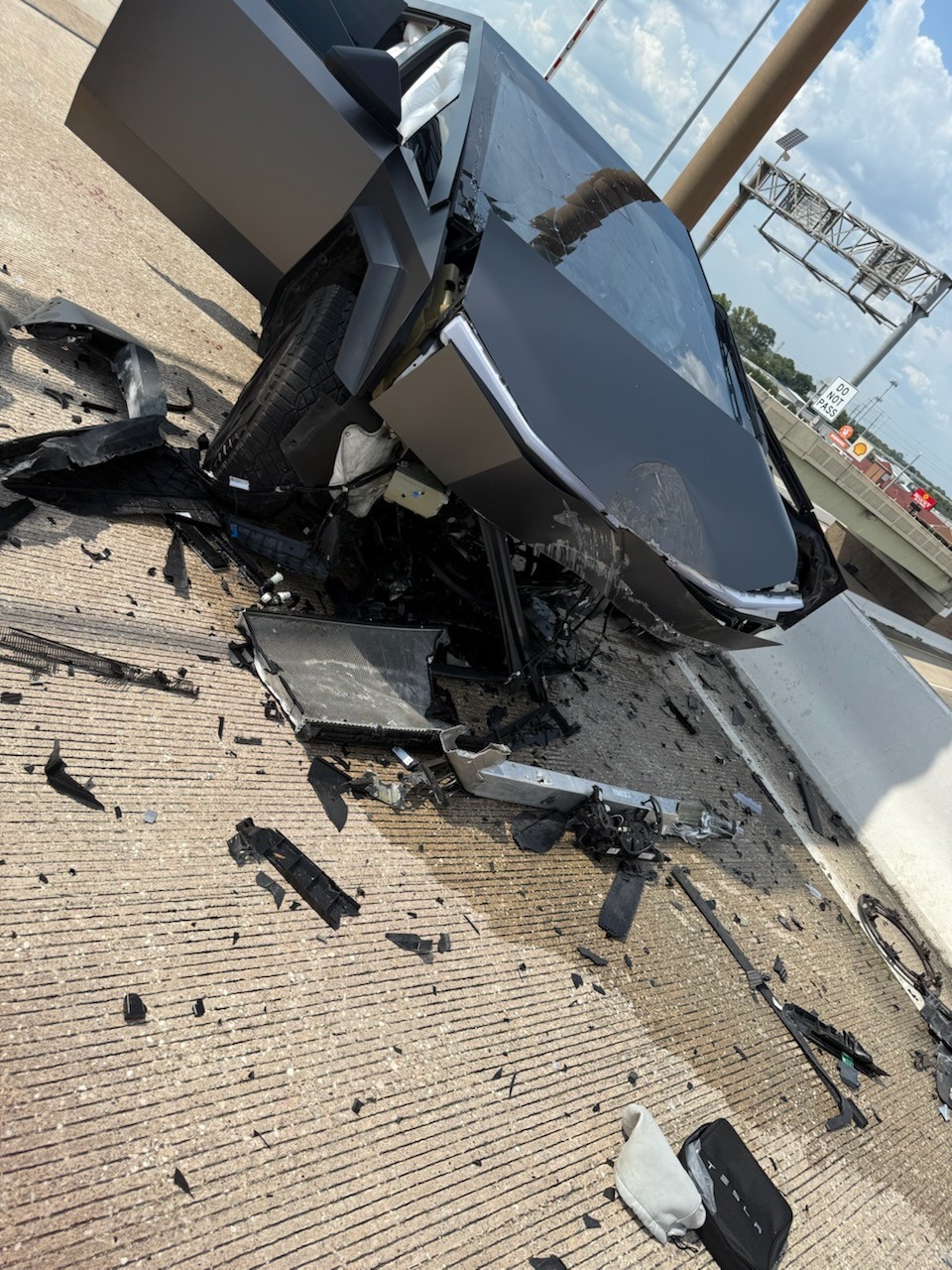
Battery technology is currently an ecological nightmare to manufacture and a rolling fire hazard inviting more death in car accidents.
More FUD (Fear, Uncertainty, Doubt). :cautious:

Beware @Spinward Flow when bringing RECEIPTS ...

LINK
Fire Incidents by Vehicle Type (2024–2025)

Propulsion TypeFires per 100K Cars SoldFire Rate (%)
EV (Battery Electric)25~0.025%
ICE (Gas/Diesel)1,530~1.53%
Hybrid (PHEV/HEV)3,475~3.48%

EVs catch fire way less often than traditional cars, and hybrids have the highest relative likelihood of fire. EV fire rates are tiny on a percentage basis, but when they do happen, they’re operationally complex (longer burn times and harder suppression).

more death in car accidents.
ORLY? :sneaky:


Back to you, in studio. 🎤
(Compressed Hydrogen is a bomb for a fuel tank).
Using current day real world technology ... this is TRUE.

Frankly, improvements in IC or a Hydrocarbon Fuel Cell could ultimately yield as good or better results …
Internal Combustion Engine vehicle technologies utilizing liquid hydrocarbon fuels is a fully mature "played out" technology at this point (in the real world). Multiple manufacturers of such power plants have spent BILLIONS (plural!) of dollars worth on research and development in the last decade+, yielding about a ~1% improvement in performance. The advancements and gains to be had ... have already been HAD ... by now. Further R&D spending on the internal combustion engine has reached the point of (severely) diminishing returns, in the real world.

The simple fact of the matter is that battery electric vehicles have ALREADY reached "price parity" with internal combustion powered vehicles on the market TODAY ... and there's plenty of "room" for R&D to run with to realize further gains and step change advantages in electrification and battery technologies (including battery powered transportation on land, on/in water and in the air!). It's just a matter of Time, Tools and Tech Manuals before the internal combustion engine becomes the "has been" technology that gets retired.

The ICE age is ending.
The Electric age is just beginning.


Your witness, counselor. 😅
 
Back
Top