• Welcome to the new COTI server. We've moved the Citizens to a new server. Please let us know in the COTI Website issue forum if you find any problems.
  • We, the systems administration staff, apologize for this unexpected outage of the boards. We have resolved the root cause of the problem and there should be no further disruptions.

Low Tech vs Interstellar societies...

Really having trouble coming up with a reason why any planetary government worth more than 50¢ wouldn't import the machines, tools, and technology necessary to raise their tech level as quickly as possible. After a 100 years, I cannot find a single reason why any Imperium world would have a tech level below 10. Simply the economic advantages for the colonies and the survivability alone would make it all but mandatory -- wouldn't it?
Well, it could be as simple as not having the manpower and cash to do it. There are plenty of places today on Earth like that. Little islands in the middle of nowhere, towns isolated because of geography, whatever. The locals could easily be descendants of people who just wanted to be left alone, or remnants of a larger population that left when something like the mines ran out.

The result is they don't have the means to leave and might not want to. At the same time, they can't afford to generate electricity 24/7 (or the local equivalent) because of cost, lack of manpower, or whatever. More isolated locations on the planet might not have the cash to afford the equipment even if some main town or small city does. So, they've reverted to late 19th Century equivalents in technology to get by with reasonable comfort.

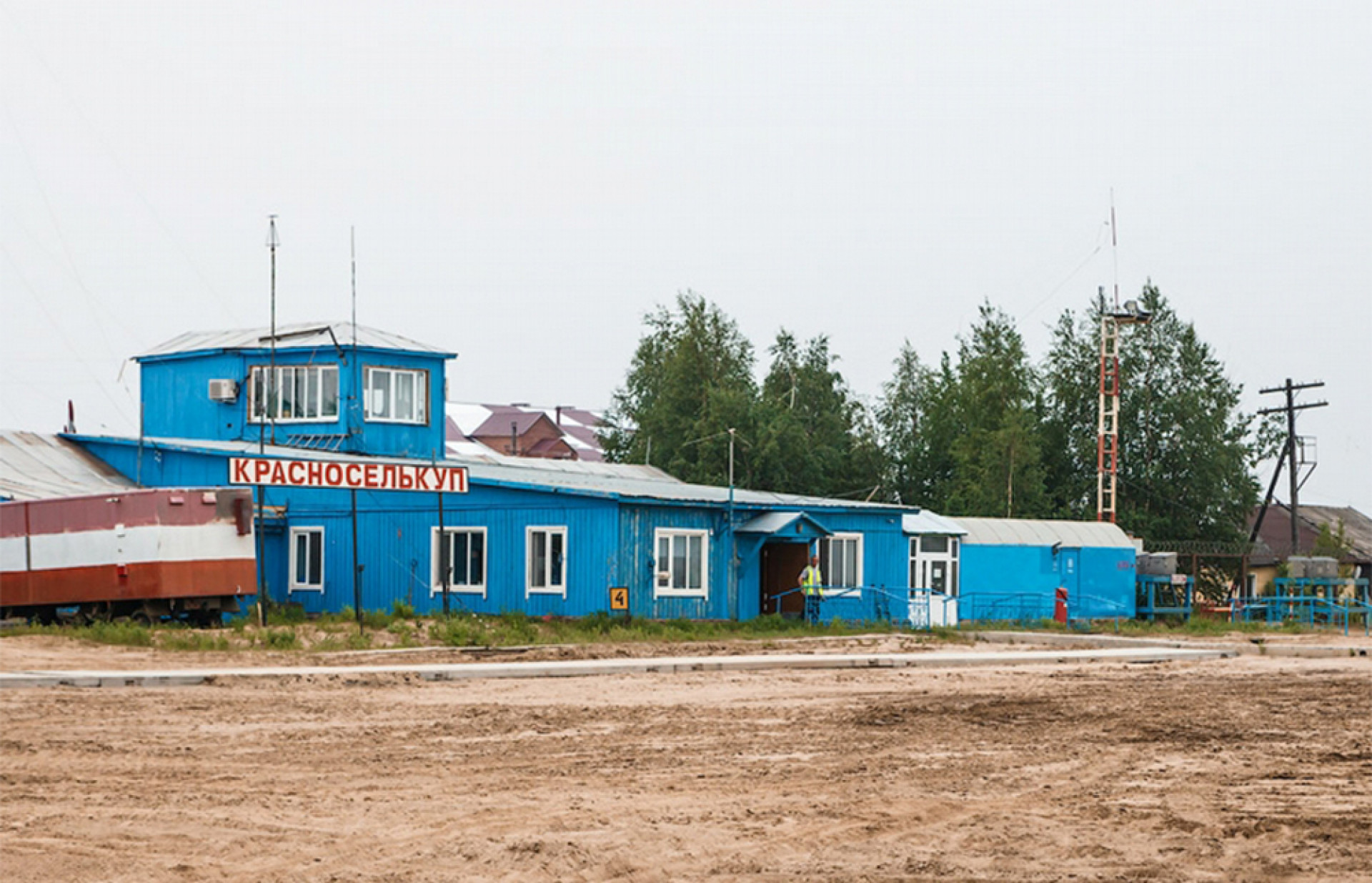
So, let's say you have a TL 4-5 planet, with population of 4 (tens of thousands), and a "starport" C. That is, there's something like:
3b57217b49d641c39ed2f56bb9ec8406.jpg


The town next to it has electricity... most of the time. The locals are NOT particularly interested in the goings on elsewhere. They get by fine on what they have and can produce locally. There's little reason for them to have a lot of high tech (expensive) stuff they have to import that they really can't use. There's no local equivalent of cell phone or internet service so, they have little need for those things. Stuff there still moves on paper by hand because it works.

There are pockets and the occasional high-tech spots because of some regular need or some local--the one rich guy--that can afford them. At the starport, there's an interface for higher tech information systems and somebody that can do high-tech money exchanges because it's necessary.

The planetary government offices might have some high tech they got because they are the government. Don't ask to use it.

You need a part for your ship and try to find somebody who can make it. The guy that runs this little shop says he can in a week or so...

2018-10-03_11.33.40.jpg


This is what you are dealing with. It's perfectly adequate for the locals and they can't understand your problem with the situation...
 
Last edited:
I would think that Florida, for most retirees, would be a low gravity planetoid insystem.
Because living in a pressurized tube carved from a rock in space is preferable to a cabana on a beach on a garden world?

Not following your reasoning here.

Low technological base for low cost service industry, but exceptional high teched medical facilities.
Exceptional for the wealthy, certainly. The benefits of living on a world with an unpolluted atmosphere, eating food grown in a field instead of a vat, are still mighty attractive to retirees of more modest means.
 
Or, there is something there that makes it special the way it is and you'll pay good money for it. Take for instance, a local restaurant that is on the has say, two TAS stars for excellence (think Michelin Guide equivalent). It's nothing to look at from the outside, but the food is incredible, the setting is awesome, and the service is impeccable.

KOKS_restaurant_Faroe_Islands_de87ad63c9.jpeg


Yes, that's actually a Michelin star restaurant!

So, you book your table say half-a-year in advance and then show up in your primo yacht to enjoy a pricey dinner.
 
Because living in a pressurized tube carved from a rock in space is preferable to a cabana on a beach on a garden world?

Not following your reasoning here.


Exceptional for the wealthy, certainly. The benefits of living on a world with an unpolluted atmosphere, eating food grown in a field instead of a vat, are still mighty attractive to retirees of more modest means.

Enough gravity to ensure that the human body functions as intended, low enough to minimize stress on the cardiovascular system.
 
Enough gravity to ensure that the human body functions as intended, low enough to minimize stress on the cardiovascular system.
Retired doesn't inherently mean disabled.

And there's still the whole 'living in a rock tube' as opposed to the cabana on the seashore thing - my personal preference is the latter, and I say that as someone who suffers from a genetic heart condition which is managed with medication and walks on the beach. :cool:

It does raise an interesting possibility of a longevity institute located on, or in, an asteroid, though. :unsure:
 
Somewhere in one of these planetoid belts is a secret research facility.
Your job is to find it.
Better start looking ... :oops:
Given the number of times "secret asteroid base/lab" gets used in sci-fi, I'd be kinda amazed if you DON'T find one, or three, or a half-dozen . . . :sneaky:

Now I have this idea for a Traveller or Mothership body-horror adventure where patients in a longevity lab turn into mutant monsters: actual Moldy Oldies!
 
Or, there is something there that makes it special the way it is and you'll pay good money for it. Take for instance, a local restaurant that is on the has say, two TAS stars for excellence (think Michelin Guide equivalent). It's nothing to look at from the outside, but the food is incredible, the setting is awesome, and the service is impeccable.

KOKS_restaurant_Faroe_Islands_de87ad63c9.jpeg


Yes, that's actually a Michelin star restaurant!

So, you book your table say half-a-year in advance and then show up in your primo yacht to enjoy a pricey dinner.
I cannot view the image.
 
Or there's this one in the Maldive Islands...

44601.jpg


news-main.1626543729.jpg


Some water world with something like coral reefs and lots of colorful fish and you get to dine like 10 meters below the ocean...

I like to scatter 'easter eggs' like these on low tech, low pop worlds just so players have another reason to go there if they want. Lots of gunfire and such getting there...
 
Really having trouble coming up with a reason why any planetary government worth more than 50¢ wouldn't import the machines, tools, and technology necessary to raise their tech level as quickly as possible. After a 100 years, I cannot find a single reason why any Imperium world would have a tech level below 10. Simply the economic advantages for the colonies and the survivability alone would make it all but mandatory -- wouldn't it?
On your point of survivability many worlds during the long night died because they relied to much on the 2nd imperium for supplies so maybe they don't want to become reliant on the 3rd imperium which could limit their options to uplift themselves
 
More likely, particularly with machinery intended for heavy duty, daily use, I'd expect on lower population worlds with limited access to really high-tech manufacturing facilities and mass production, that simpler machines that are low tech in many ways would be substituted.

That is, say construction and farm machinery are designed so a local mechanic with basic tools can make virtually any repair to the vehicle. Parts are designed to be easily manufactured using simple methods when necessary. At the same time, the manufacturer has used higher tech materials where possible to make the vehicle as reliable as is cost effective. This way the machine is as reliable as possible while being fixable with basic hand tools for the most part.

On a low population world, the locals might--likely--not have the cash to buy expensive high-tech parts or wait for their delivery since no business could afford to stock them with near zero demand.

As an example of this, I'm currently doing a project car with one of my grandkids (giving my age away there, hum?). In rebuilding the front wheel hubs, we needed new taper roller bearings. The car is pretty rare and foreign (to the US) making getting parts sometimes a challenge. For the bearings I went to an industrial bearing wholesaler who easily matched them but had to order them in from another one of their locations in another state. This was in the 5th largest city in the US where I was ordering them in person at the counter.

Hardly a high-tech part, but they didn't have them immediately in stock. Now, imagine some low-tech backwater with a population of say, 35,000 give or take planetwide. There likely is no one locally capable of manufacturing such a part. So, it's got to be ordered from off world and could take months to arrive at a pretty steep cost.

So, the manufacturer might, instead, substitute simple oil-bushings in a machine instead. These can be made on a manual lathe easily from basic stock metals. That would allow a local machine shop to make the part--or the person needing it might have a lathe of their own--and get the machine back in service. Sure, it's less efficient and possibly means the parts wear out faster, but you can fix it in a matter of a day or two versus waiting months and paying far more.

Thus, on low population backwaters there is every reason to go low-tech on much of what's there. I would say to Ross that it's likely he's never had to wrench or fix stuff like that on a limited budget while being in The-Middle-of-Nowhere. I have, and am very appreciative of how old, low-tech, equipment was designed for some 'shade tree mechanic' to be able to fix it with stuff in a hand carried toolbox.

As a movie version, remember how Doc Brown had to fix a simple IC chip by using a box full of components on the hood of the DeLorian?

Zz0wNDUyNzI3OGJiZTQxMWVmOTMxZGYyNGI3ZTQxYmQyZA.jpg


Problem.

Better on a low-tech world that you have a solidly reliable, always runs, tractor like this:

6009441091_78bf372e38_b.jpg


Then a high-tech tractor with all the latest bells and whistles...

autonomous-tractor-working-corn-field-future-technology-with-smart-agriculture-farming-concept_84831-89.jpg


Like that, because when that high-tech tractor breaks down because some electronic component the size of a grain of salt died, you aren't fixing it any time soon if you can even figure out what the problem is.
 
On a low population world, the locals might--likely--not have the cash to buy expensive high-tech parts or wait for their delivery since no business could afford to stock them with near zero demand.

As an example of this, I'm currently doing a project car with one of my grandkids (giving my age away there, hum?). In rebuilding the front wheel hubs, we needed new taper roller bearings. The car is pretty rare and foreign (to the US) making getting parts sometimes a challenge. For the bearings I went to an industrial bearing wholesaler who easily matched them but had to order them in from another one of their locations in another state. This was in the 5th largest city in the US where I was ordering them in person at the counter.

Hardly a high-tech part, but they didn't have them immediately in stock. Now, imagine some low-tech backwater with a population of say, 35,000 give or take planetwide. There likely is no one locally capable of manufacturing such a part. So, it's got to be ordered from off world and could take months to arrive at a pretty steep cost.
While I largely agree with you, I've always thought that the Vilani (and thus the First Imperium, and most of the Third) tended to keep a lot more stock on hand. Their economy never seemed to be one that relied on 'just in time' delivery, and I don't think it fits their mindset and society.

On the other hand, old adventures imply that often new parts are hard to come by and rummaging through junk yards and old derelict ships is a thing. Of course, if the part that's broken on your machine is one that commonly breaks, you're probably out of luck. Better hope there's one that's been junked because of an accident rather than because of wear and tear.
 
Back
Top