
You are using an out of date browser. It may not display this or other websites correctly.
You should upgrade or use an alternative browser.
You should upgrade or use an alternative browser.
Arcturus Subsector redux
- Thread starter BwapTED
- Start date
EPIRUS
Epirus is the tide-locked moon of a gas giant. Its surface is covered in a cold, shallow sea kept from freezing by a combination of gravitational flexion, salinity, and geothermal vents. The world's very thin nitrogen-oxygen atmosphere necessities a compressor unit, but otherwise nothing more than warm clothing is needed for a human to survive on the surface. Pink snow, home to harmless microbes, falls often from the blue-black skies.
The Epirotes, about thirty million of them, live on a massively urbanized archipelago. Past generations lived in a single arcology, but the burgeoning population has spread into unsealed cities and towns in recent decades. Great atmospheric engines hum and whoosh, releasing steady flows of breathable air to replace what leaks out to space. Fusion power heats and lights homes and workplaces.
Universal advanced healthcare (TL 12) has prevented bone density loss and other problems of living in low gravity, and Epirotes closely resemble other Solomani,, being a little taller and slimmer than most but in normal ranges.
The government of the First Citizen (the (third such dictator) does not concern itself with acts of corporate espionage or sabotage that do not endanger state security or uninvolved Epirote citizens, and ethically flexible travellers can easily find work here with one of the local branches of the subsector's larger concerns,
The planet's chief industry is the production of starship refined fuel.
Cuisine is based mostly on processed krill and algae,
| B4387B6-C |
Epirus is the tide-locked moon of a gas giant. Its surface is covered in a cold, shallow sea kept from freezing by a combination of gravitational flexion, salinity, and geothermal vents. The world's very thin nitrogen-oxygen atmosphere necessities a compressor unit, but otherwise nothing more than warm clothing is needed for a human to survive on the surface. Pink snow, home to harmless microbes, falls often from the blue-black skies.
The Epirotes, about thirty million of them, live on a massively urbanized archipelago. Past generations lived in a single arcology, but the burgeoning population has spread into unsealed cities and towns in recent decades. Great atmospheric engines hum and whoosh, releasing steady flows of breathable air to replace what leaks out to space. Fusion power heats and lights homes and workplaces.
Universal advanced healthcare (TL 12) has prevented bone density loss and other problems of living in low gravity, and Epirotes closely resemble other Solomani,, being a little taller and slimmer than most but in normal ranges.
The government of the First Citizen (the (third such dictator) does not concern itself with acts of corporate espionage or sabotage that do not endanger state security or uninvolved Epirote citizens, and ethically flexible travellers can easily find work here with one of the local branches of the subsector's larger concerns,
The planet's chief industry is the production of starship refined fuel.
Cuisine is based mostly on processed krill and algae,
Last edited:
ARCTURUS
I won't overwrite the excellent material on this world (planetoid belt) but I will expand on it.
LING -STANDARD PRODUCTS SECURITY FORCE
shotgun, club, cloth
LAMARCK MINERALS COMPANY POLICE
snub gun (revolver), cudgel, mesh
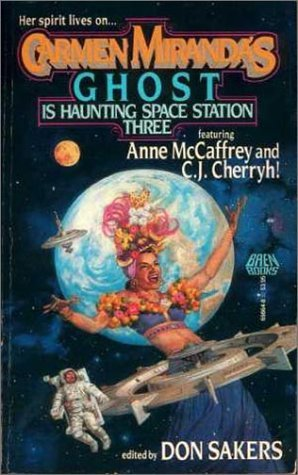
CARMEN'S CANTINA
The lower deck restaurant on Space Station Number Three, rumored to be haunted but that seems to attract more guests than it repels.
See also: The Haunted Imperium, JTAS Online
I won't overwrite the excellent material on this world (planetoid belt) but I will expand on it.
LING -STANDARD PRODUCTS SECURITY FORCE
shotgun, club, cloth
LAMARCK MINERALS COMPANY POLICE
snub gun (revolver), cudgel, mesh
CARMEN'S CANTINA
The lower deck restaurant on Space Station Number Three, rumored to be haunted but that seems to attract more guests than it repels.
See also: The Haunted Imperium, JTAS Online
Last edited:
BOLIVAR
Bolivar is tide-locked to an orange dwarf star. The world is rich in abiotic hydrocarbons and boiling tar lakes dot the of the dayside, while oily seas of slush cover most of the frigid nightside. Fumes from asphalt pollute the atmosphere, which is slowly escaping. Humans require breathing gear to survive outdoors. Additionally, special insulated suits or vehicles are necessary for travel beyond the temperate twilight band.
Most of the world's 80k population lives in Ciudad Bolivar, a small city built in and under an impact crater. The meteorite strike that created the depression millions of years ago deposited a great store or nickel-iron and iridium, materials which the colonists who came here during the Rule of Man quickly began to mine and to utilize in constructing their settlement. Iron spire-topped towers and gothic arches built a thousand years ago have darkened with accretions of soot and grease, a cityscape lit by great torches of burning hydrocarbon fuel--cheaper than fusion, here.
Buildings have airlocks. Within, the air is clean and pressure is higher, though still lower than 1 bar.
For a time, Bolivar prospered, but its mines have been depleted by centuries of extraction, and none now produce enough metal for export. What industry exists is entirely domestic, and largely consists of recycling old machines, crude exploitation of natural hydrocarbons as fuel, and cottage-level manufacture of outmoded filter-masks, rifles, simple tools, and so on.
A sizeable part of the population works in fungus farms that fill what were once mineshafts; Bolivarian chefs know dozens of ways to prepare mushrooms and yeast-based meals.
A free public education system and computer library network has thus far prevented Bolivar from actually losing the skills and knowledge to maintain and repair its high technology, but still the world slowly sinks into decline.
With its industries in decay Bolivar now exports the one thing it has left of value: its people. Corporate indents and free agents seeking employment leave on every passing starship. Remittances paid by Bolivarians working off world are a microscopic blip in the vast economy of Arcturus Subsector but a lifeline for the home-world. If everyone came home at once, the population would more than double.
Beyond the extrality line, travelers are confronted with signage warning that no weapons are permitted for civilian carry and use in the city.
Militiamen who inspect visitors are pretty lenient about tools like utility knives, but they won't let a man with a cutlass at his hip just saunter on by.
BOLIVARIAN MILITIA
Rifle*, bayonet, cloth armor
Militia on outdoor duty wear enclosed plastic helmets fitted with filter-compressors, ear-mikes, and wide visors (allowing for good peripheral vision)
Their field duty uniforms are splotchy gray and midnight blue.
* snipers carry laser rifles, but these are very expensive weapons that cannot be manufactured on Bolivar, but can be repaired and recharged there
| B526448-C |
Bolivar is tide-locked to an orange dwarf star. The world is rich in abiotic hydrocarbons and boiling tar lakes dot the of the dayside, while oily seas of slush cover most of the frigid nightside. Fumes from asphalt pollute the atmosphere, which is slowly escaping. Humans require breathing gear to survive outdoors. Additionally, special insulated suits or vehicles are necessary for travel beyond the temperate twilight band.
Most of the world's 80k population lives in Ciudad Bolivar, a small city built in and under an impact crater. The meteorite strike that created the depression millions of years ago deposited a great store or nickel-iron and iridium, materials which the colonists who came here during the Rule of Man quickly began to mine and to utilize in constructing their settlement. Iron spire-topped towers and gothic arches built a thousand years ago have darkened with accretions of soot and grease, a cityscape lit by great torches of burning hydrocarbon fuel--cheaper than fusion, here.
Buildings have airlocks. Within, the air is clean and pressure is higher, though still lower than 1 bar.
For a time, Bolivar prospered, but its mines have been depleted by centuries of extraction, and none now produce enough metal for export. What industry exists is entirely domestic, and largely consists of recycling old machines, crude exploitation of natural hydrocarbons as fuel, and cottage-level manufacture of outmoded filter-masks, rifles, simple tools, and so on.
A sizeable part of the population works in fungus farms that fill what were once mineshafts; Bolivarian chefs know dozens of ways to prepare mushrooms and yeast-based meals.
A free public education system and computer library network has thus far prevented Bolivar from actually losing the skills and knowledge to maintain and repair its high technology, but still the world slowly sinks into decline.
With its industries in decay Bolivar now exports the one thing it has left of value: its people. Corporate indents and free agents seeking employment leave on every passing starship. Remittances paid by Bolivarians working off world are a microscopic blip in the vast economy of Arcturus Subsector but a lifeline for the home-world. If everyone came home at once, the population would more than double.
Beyond the extrality line, travelers are confronted with signage warning that no weapons are permitted for civilian carry and use in the city.
Militiamen who inspect visitors are pretty lenient about tools like utility knives, but they won't let a man with a cutlass at his hip just saunter on by.
BOLIVARIAN MILITIA
Rifle*, bayonet, cloth armor
Militia on outdoor duty wear enclosed plastic helmets fitted with filter-compressors, ear-mikes, and wide visors (allowing for good peripheral vision)
Their field duty uniforms are splotchy gray and midnight blue.
* snipers carry laser rifles, but these are very expensive weapons that cannot be manufactured on Bolivar, but can be repaired and recharged there
Last edited:
TEWFIK TERRAFORMING PROGRAM
Terraforming began under the Rule of Man and continues today. Tewfik starships capture icy bodies and drop those to vaporize in the atmosphere, an activity they have engaged in for centuries. Tailored microbes work slowly, invisibly to clean the tainted air. Introduced mosses and lichens now flourish in the midworld belt. Oxygen byproducts are pumped directly into bodies of water to assist the growth of aquatic animal life.
The government estimates that in another two centuries the air pressure and quality will have improved enough that citizens can dispense with masks outdoors. The atmosphere at surface level should resemble that of a high alpine region on Terra.
Already, a hundred thousand pioneers inhabit dome-houses on the surface, tending the greenhouse nurseries of pine, tamarisk, and spruce or looking after the ever-expanding lake fisheries. The forestation phase will begin soon.
Terraforming began under the Rule of Man and continues today. Tewfik starships capture icy bodies and drop those to vaporize in the atmosphere, an activity they have engaged in for centuries. Tailored microbes work slowly, invisibly to clean the tainted air. Introduced mosses and lichens now flourish in the midworld belt. Oxygen byproducts are pumped directly into bodies of water to assist the growth of aquatic animal life.
The government estimates that in another two centuries the air pressure and quality will have improved enough that citizens can dispense with masks outdoors. The atmosphere at surface level should resemble that of a high alpine region on Terra.
Already, a hundred thousand pioneers inhabit dome-houses on the surface, tending the greenhouse nurseries of pine, tamarisk, and spruce or looking after the ever-expanding lake fisheries. The forestation phase will begin soon.
Last edited:
Anenerkuk
| A56A764-E |
80 million citizens live in a dozen gravitic-lift cities that hang in air over the crystal-blue world-ocean of this smallish planet. Most people here descend from Solomani colonists of Hathor and the defunct Arcturus Federation, who arrived during the Long Night and subjugated the Vilani who had come first, long before. The newcomers renamed the world, Hyacinthe, but when Hathor eventually took control during the Solomani Rim War, with Imperial aid, its government reverted to the old Vilani name to signal the defeat of the Solomani Cause.
Swarms of robots work underwater in mining and aquaculture sectors.
Anenerkuk is actually a bit more advanced in science and technology than its colonial master, and the Hathorian regime here works diligently to identify top experts and advanced equipment for relocation to Hathor.
The mixed Vilani/Solomani minority were formerly sub citizens under the racialist Solomani state but are now equal citizens by Hathorian policy. They strongly support the colonial administration
Most of the Solomani majority at least tacitly support independence and sympathize with the Solomani Cause, but a significant fraction has gone over to the occupiers.
Rising political violence may cause the colonial gov't to rethink its liberal policies and permissive weapons laws, but for now Anenerkuk remains a relatively free society.
Anenerkuk (world) - Traveller
YAFFA
TEWFIK'S CAPITAL
The early colonists discovered a vast network of lave tubes near the equator and immediately set to work converting these into homes and tunnel-farms. Over the last two-and-a-half millennia, the Tewfikites have expanded and improved the tunnel city. In the Long Night, an arcology was added to accommodate the burgeoning population. Today, the city of Yaffa is home to over 90 million people.
The largest part of the city in both area and population lies below ground. Beautifully carved stone galleries extend for many kilometers, multilevel homes and workplaces built into the side walls, artificial rivers flowing along the floors and fusion-powered lamps burning in the ceiling. Aircars and, for the wealthy grav, harnesses, allow easy and quick travel along the tunnels and between levels, but an older vacuum rail system still runs in parts of the city, and there are lifts and ancient stone stairways built all over. The canal-rivers carry pleasure boats on long cruises through the gently descending waterways, which all leads down into a large cavern lake under the city. A subtropical interior climate prevails, with regular dewfall in the larger caverns and tunnels. Gardens of lemon trees, creeping honeysuckle, grapevines, and permissions grow on fenced walkway platforms along the walls of the great galleries, in the courtyards of homes and hostels cut into side caves, and on slow-moving contra-grav barges Such greenery keeps the air sweet and freshened, Visitors with ample time to tour the city should not miss the famous Hundred Basilicas or the teeming multi-level market of the Grand Souk.
The domed arcology above the Old City is smaller, but still one of the largest structures in the subsector, and contains many factories, shops, hotels, apartment blocs, clinics, and displays a sleeker, brass-and-crystal style influenced by the architecture associated with the early Solomani Movement on Terra.
TEWFIK'S CAPITAL
The early colonists discovered a vast network of lave tubes near the equator and immediately set to work converting these into homes and tunnel-farms. Over the last two-and-a-half millennia, the Tewfikites have expanded and improved the tunnel city. In the Long Night, an arcology was added to accommodate the burgeoning population. Today, the city of Yaffa is home to over 90 million people.
The largest part of the city in both area and population lies below ground. Beautifully carved stone galleries extend for many kilometers, multilevel homes and workplaces built into the side walls, artificial rivers flowing along the floors and fusion-powered lamps burning in the ceiling. Aircars and, for the wealthy grav, harnesses, allow easy and quick travel along the tunnels and between levels, but an older vacuum rail system still runs in parts of the city, and there are lifts and ancient stone stairways built all over. The canal-rivers carry pleasure boats on long cruises through the gently descending waterways, which all leads down into a large cavern lake under the city. A subtropical interior climate prevails, with regular dewfall in the larger caverns and tunnels. Gardens of lemon trees, creeping honeysuckle, grapevines, and permissions grow on fenced walkway platforms along the walls of the great galleries, in the courtyards of homes and hostels cut into side caves, and on slow-moving contra-grav barges Such greenery keeps the air sweet and freshened, Visitors with ample time to tour the city should not miss the famous Hundred Basilicas or the teeming multi-level market of the Grand Souk.
The domed arcology above the Old City is smaller, but still one of the largest structures in the subsector, and contains many factories, shops, hotels, apartment blocs, clinics, and displays a sleeker, brass-and-crystal style influenced by the architecture associated with the early Solomani Movement on Terra.
Last edited:
STARTOWN
Another 5 million people in and work in the Startown around Tewfik's surface lowport, joined to the arcology and Old City by gravitic tubeways.'
Architecture here is not so charming as in Yaffa proper, more utilitarian.
The highport appears like a small moonlet at night, fixed and glinting in the dark blue sky.
OTHER CITIES
Yaffa is only the largest settlement, queen among a couple of hundred arcologies, cavern cities, and subglacial habitats.
Another 5 million people in and work in the Startown around Tewfik's surface lowport, joined to the arcology and Old City by gravitic tubeways.'
Architecture here is not so charming as in Yaffa proper, more utilitarian.
The highport appears like a small moonlet at night, fixed and glinting in the dark blue sky.
OTHER CITIES
Yaffa is only the largest settlement, queen among a couple of hundred arcologies, cavern cities, and subglacial habitats.
DESIGN NOTE
One of the things about working all these very high population worlds is the sheer scale, and the need for plausible variety. But rather than try to work of the particulars of a planet for more than a billion inhabitants, I aim for a broad overview and then something on the star port/main city, and so on. I can always expand later. Some of the cities on Tewfik, for example, might have particular cultures that differ from the dominant planetary culture. The predominant culture shows its Levantine and Western mixed origins and will have influenced other groups that might have arrived later or in small numbers.
That's generally going to be my approach to these crazy high pop worlds. Determine what the main culture looks like and then add around it.
One of the things about working all these very high population worlds is the sheer scale, and the need for plausible variety. But rather than try to work of the particulars of a planet for more than a billion inhabitants, I aim for a broad overview and then something on the star port/main city, and so on. I can always expand later. Some of the cities on Tewfik, for example, might have particular cultures that differ from the dominant planetary culture. The predominant culture shows its Levantine and Western mixed origins and will have influenced other groups that might have arrived later or in small numbers.
That's generally going to be my approach to these crazy high pop worlds. Determine what the main culture looks like and then add around it.
MELCHIOR TREEHERDS
Treeherds are enormous colonial protists with traits of both green plants and animal life.
A colony moving across the tundra looks like forest of small firs moving on a slimy blue carpet of sap, with millions of tendrils reach forward to dig in the earth, grip onto rocks or other holds, and slowly tug the whole mass forward.
Blue-tinged earth roads show the regular routes of these migrating creatures, and in the trails, one may find crushed bones and shells of digested animals and nodules of fragrant blue amber.
The treeherds exude pheromones attractive to many of the land animal species native to Melchior; the scent reminds many humans of 'new starship' smell.
Treeherds are enormous colonial protists with traits of both green plants and animal life.
A colony moving across the tundra looks like forest of small firs moving on a slimy blue carpet of sap, with millions of tendrils reach forward to dig in the earth, grip onto rocks or other holds, and slowly tug the whole mass forward.
Blue-tinged earth roads show the regular routes of these migrating creatures, and in the trails, one may find crushed bones and shells of digested animals and nodules of fragrant blue amber.
The treeherds exude pheromones attractive to many of the land animal species native to Melchior; the scent reminds many humans of 'new starship' smell.
Last edited:
THORWALD LEYDEN FOREST MICROCLIMATE
The thick old growth forests of Leyden Trees that cover much of the northern temperate zone archipelago resemble a Terran humid subtropical cloud forest biome. Misty days are common, and the air carries a whiff of ozone. The terrible electrical storms that frequently rip across Thorwald strike often but inflict little damage here, with the great natural lightning rod plants to ground falling bolts.
see wiki for Thorwald Dragon (not my creation)
ARCHERY ON THORWALD
The weapons laws are very strict--no weapons out of the home, and those weapons are limited to archaic or blade types.
But shooting bows and crossbows was a popular pastime on Thorwald before the Imperium conquered the world, and groups of hunters and shooters still meet in the Leyden-woods to practice their skills. Some of these 'hunters lodges' are involved in terrorism/freedom fighting.
The thick old growth forests of Leyden Trees that cover much of the northern temperate zone archipelago resemble a Terran humid subtropical cloud forest biome. Misty days are common, and the air carries a whiff of ozone. The terrible electrical storms that frequently rip across Thorwald strike often but inflict little damage here, with the great natural lightning rod plants to ground falling bolts.
see wiki for Thorwald Dragon (not my creation)
ARCHERY ON THORWALD
The weapons laws are very strict--no weapons out of the home, and those weapons are limited to archaic or blade types.
But shooting bows and crossbows was a popular pastime on Thorwald before the Imperium conquered the world, and groups of hunters and shooters still meet in the Leyden-woods to practice their skills. Some of these 'hunters lodges' are involved in terrorism/freedom fighting.
Last edited:
CYMBELINE
Cymbeline's government popularly elected government holds a monopoly, backed by the Third Imperium, over the planetwide telecommunications and computer network.
The gov't maintains a registry of corporate charters and handles some other civil matters. It collects user fees, but not taxes. It does not maintain regular police forces, a standing army, or even operate a permanent system of criminal courts. Nor does it provide healthcare or educational services. All activities outside the state's narrow remit fall to private corporations, large and small, and to individuals. The only official punishments the state doles out are electronic credit fines, revocation of charters, and contract operations. That last category means hiring mercenaries, saboteurs, or assassins to take care of a problematic client/citizen.
The citizens of Cymbelline live crowded into a sprawling city-belt built in the floors and lower walls of enormous, interconnected canyons. Only far below surface level is the air thick enough to breathe and water is found in good quantities.
The highlands are far harsher the deep regions, with only a tenuous atmosphere, significant volcanic activity, no liquid water, and seas and lakes of silicate so fine it acts like quicksand. Nobody lives there, and hardly anyone ever goes up there apart from the occasional scientist doing field research.
TECHNOLOGY
Cymbeline is highly sophisticated in bionics, cybernetics, semiconductors, holography, and neural-tech.
Perhaps 10% of the residents and citizens have some form of implant or augmentation, and plastic surgery is available from walk-in automated surgical booths.
Things weren't always this advanced. Cymbeline jumped from TL 9 to TL 14 in a little over a century, and society shows signs of 'techno-shock.'
| A9F4840-E |
Cymbeline's government popularly elected government holds a monopoly, backed by the Third Imperium, over the planetwide telecommunications and computer network.
The citizens of Cymbelline live crowded into a sprawling city-belt built in the floors and lower walls of enormous, interconnected canyons. Only far below surface level is the air thick enough to breathe and water is found in good quantities.
The highlands are far harsher the deep regions, with only a tenuous atmosphere, significant volcanic activity, no liquid water, and seas and lakes of silicate so fine it acts like quicksand. Nobody lives there, and hardly anyone ever goes up there apart from the occasional scientist doing field research.
TECHNOLOGY
Cymbeline is highly sophisticated in bionics, cybernetics, semiconductors, holography, and neural-tech.
Perhaps 10% of the residents and citizens have some form of implant or augmentation, and plastic surgery is available from walk-in automated surgical booths.
Things weren't always this advanced. Cymbeline jumped from TL 9 to TL 14 in a little over a century, and society shows signs of 'techno-shock.'
Last edited:
DESIGN NOTE
The combination of urbanization, very high tech, and basically no law made a cyberpunk route pretty obviously an option here, so I went with it.
Adventure 13 says 22 mil, but that's too low for an 8 rating. I may adjust it upwards. Most likely, I will write that the main city is 22 million, and there are other canyon cites for a total of over 100 million.
I might also do something weird, like add a bunch of androids, but not 80 million!
He say you dangerous man. He say you Bladerunner!
I'll have to look back at older Traveller tech tables before I decide. I don't want this place too far out of whack with the rest of the setting.
The combination of urbanization, very high tech, and basically no law made a cyberpunk route pretty obviously an option here, so I went with it.
Adventure 13 says 22 mil, but that's too low for an 8 rating. I may adjust it upwards. Most likely, I will write that the main city is 22 million, and there are other canyon cites for a total of over 100 million.
I might also do something weird, like add a bunch of androids, but not 80 million!
He say you dangerous man. He say you Bladerunner!
I'll have to look back at older Traveller tech tables before I decide. I don't want this place too far out of whack with the rest of the setting.
Last edited:
TUNGUSKA
A hot, blighted, dusty little planet with air too thin and tainted with sulfurous fumes besides, little surface water and all of that polluted and stinking of rotten eggs, and sixty million people, many sick and malnourished,
There's really no effective law enforcement. To cut down on crime, the Peoples Assembly legalized many offenses short of murder, and to save more money it mostly dismantled the courts and defunded the police.
Cops still exist, but as a semi-criminal club or gang. They routinely solicit bribes, beat people up, commandeer/steal gods and services, and wave their badges around like that means something when it's the guns they hold in their other hands that people respect.
What little government remains focuses on issuing filter masks and food rations, collecting and disposing of the dead, and operating free euthanasia booths. It prints plastic money, too.
People compete for living space in the world's single arcology.
| C422720-A |
A hot, blighted, dusty little planet with air too thin and tainted with sulfurous fumes besides, little surface water and all of that polluted and stinking of rotten eggs, and sixty million people, many sick and malnourished,
There's really no effective law enforcement. To cut down on crime, the Peoples Assembly legalized many offenses short of murder, and to save more money it mostly dismantled the courts and defunded the police.
Cops still exist, but as a semi-criminal club or gang. They routinely solicit bribes, beat people up, commandeer/steal gods and services, and wave their badges around like that means something when it's the guns they hold in their other hands that people respect.
What little government remains focuses on issuing filter masks and food rations, collecting and disposing of the dead, and operating free euthanasia booths. It prints plastic money, too.
People compete for living space in the world's single arcology.
TUNGUSKA, PART 2
The old government went broke trying to terraform the planet and, at the end, only succeeded in making conditions worse. Atmospheric engineering was supposed to remove toxic gases and add nitrogen and oxygen, but funds ran out before the addition part of that plan could get very far, and colonists were never able to move out of the arcology en masse.
The sealed city now holds three times optimal residential capacity. Environmental controls are starting to malfunction, with rising heat and poor air quality but sanitation and agricultural robots continue to function.
The Peoples Assembly meets every ten day/night cycles to debate and plan. Any citizen or permanent resident may attend and participate. Without a regular law enforcement arm and with only a skeletal administrative structure, the democratic government relies on volunteers to enforce its decrees.
With no enforcement of the defunct prior regime's arms control laws, people go about with whatever weapons they possess and feel like carrying.
TL has dropped from 12 to 10 since the early, hopeful days of colonization.
Note that anyone going outside would need not only a filter mask but also a compressor. These devices are readily available in large quantities, but many people spend all their time inside the city as so don't bother with them.
The old government went broke trying to terraform the planet and, at the end, only succeeded in making conditions worse. Atmospheric engineering was supposed to remove toxic gases and add nitrogen and oxygen, but funds ran out before the addition part of that plan could get very far, and colonists were never able to move out of the arcology en masse.
The sealed city now holds three times optimal residential capacity. Environmental controls are starting to malfunction, with rising heat and poor air quality but sanitation and agricultural robots continue to function.
The Peoples Assembly meets every ten day/night cycles to debate and plan. Any citizen or permanent resident may attend and participate. Without a regular law enforcement arm and with only a skeletal administrative structure, the democratic government relies on volunteers to enforce its decrees.
With no enforcement of the defunct prior regime's arms control laws, people go about with whatever weapons they possess and feel like carrying.
TL has dropped from 12 to 10 since the early, hopeful days of colonization.
Note that anyone going outside would need not only a filter mask but also a compressor. These devices are readily available in large quantities, but many people spend all their time inside the city as so don't bother with them.
Last edited:
Similar threads
- Replies
- 10
- Views
- 3K


- Replies
- 45
- Views
- 11K
- Replies
- 38
- Views
- 8K